Most individuals get into trading with the idea that it is about finding the right stock or indicator. It should be followed by a few charts, a few strategies, and profits.
Then reality hits. Trades don’t work consistently. Good setups fail. Emotions take over. And then, the trading becomes much more challenging than anticipated. This is the fact nobody tells you at an early age:
It is not difficult to trade due to the market. It can be tough because of the approach you take. Charts are not the problem. It lies in decision-making, discipline, and taking action despite uncertainty.
To dissect the actual causes of Why Trading Feels Difficult, not easy, and what most newcomers lack.
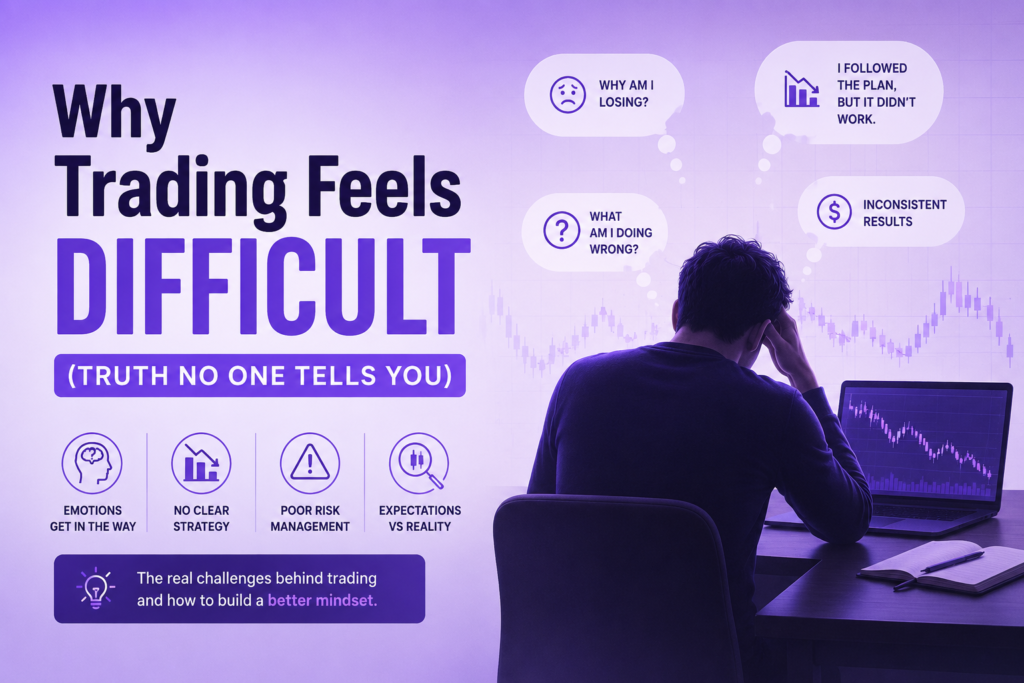
Why Does Trading Feel Difficult?
You need to understand the root cause of Why Trading Feels Difficult before resolving the problem. They are not fortuitous problems. They are typical trend patterns that every trader goes through.
1. You Are Dealing with Uncertainty Every Time
In most careers, hard work leads to expected outcomes. The thing is, even a perfect trading arrangement will not work.
This brings about mental unease since:
- You may do everything possible and lose.
- No trade has anything like a guarantee.
This uncertainty contributes to making trading more difficult than it can be made out.
2. Information Overload Creates Confusion
The amount of content out there is excessive:
- Indicators
- Strategies
- Opinions
- News
Novices attempt to become knowledgeable about everything at once. The finding is Disorientation rather than direction. They continue changing strategies instead of developing density.
3. Lack of Structured Approach
The majority of traders begin without a procedure.
They:
- Enter randomly
- Exit emotionally
- Change decisions frequently
With no structure, all trades become stressful. This is the reason why the issue of having a system is more valuable than having setups.
4. Emotional Pressure Affects Decisions
Trading is with real money. That changes everything.
- Fears drive you to leave early
- Greed causes you to keep long-term
- Revenge trading is caused by losses
Logic is distorted by emotions. Good setups fail because when they are executed, it should be emotional.
5. Expecting Fast Results
Many novices expect to make a lot of money. When one does not get results immediately, one becomes frustrated.
This leads to:
- Overtrading
- Taking low-quality setups
- Ignoring rules
Trading is a skill. It takes time to develop consistency.
6. No Risk Management Discipline
Any minor errors can lead to significant losses unless the associated risks are properly controlled.
Common issues include:
- No stop-loss
- Large position sizes
- Attempting to salvage losses as rapidly as possible
This causes pressure and makes trading overwhelming.
7. Switching Strategies Too Often
Traders continue to switch strategies rather than learn to handle them.
- Loss (1) to change strategy
- Two defeats – attempt something new
This prevents learning. It is depth, not variety, that will bring consistency.
8. Lack of Real Market Experience
Theoretical and video learning do not constitute the same thing as facing live markets. In real conditions:
- Prices move faster
- Emotions are stronger
- Decisions need to be quick
The lack of experience makes execution a challenge.
Truth Most People Realize Late
It is not only about knowledge when it comes to trading.
It is about:
- Bringing that knowledge to bear at all times
- Managing emotions
- Obedience to rules despite defeat
And that is where most people fail.
This is the reason why trading becomes challenging.
How to Make Trading Feel Easier?
It does not take a night for trading to become easy. But then you realize when you adjust your methods.
Build a Simple and Structured System
Rather than learning everything about it, please start by focusing on a single setup. At Aceink, in our weekly stock trading webinar, we explain every edge of stock marketing learning, making the trading easier for you.
Define:
- Entry rules
- Exit rules
- Risk management
Whether you want learning technical analysis, breakout vs fakeout,
Focus on Process
You should not consider yourself as a single trade.
Focus on:
- Following your plan
- Taking quality setups
- Managing risk properly
Process brings about consistency.
Accept Losses as Part of the Game
Failure is not loss. They are involved in trading. Trades are lost even by professional traders. It is not aimed at making losses. The idea is to control them.
Improve Decision-Making Gradually
Trading is better with better decisions.
This improves with:
- Practice
- Review
- Discipline
Growth is gradual
Why Proper Stock Market Learning Changes Everything
Most traders struggle to trade because they learn by chance.
Structured Stock Market Learning can assist you to:
- Understand market behavior
- Avoid common trading mistakes
- Develop a disciplined attitude
This eliminates confusion and enhances clarity.
Learn the Reality of Trading with Free Stock Market Webinar
It is important to understand why trading can seem challenging. But actual progress comes from seeing how to do it in actual markets.
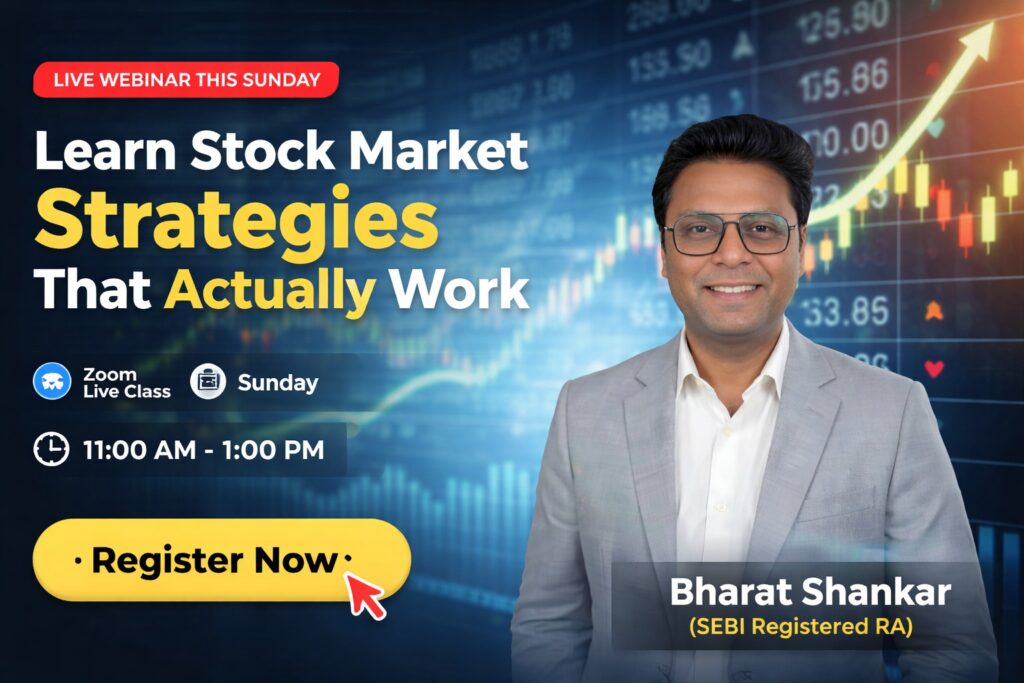
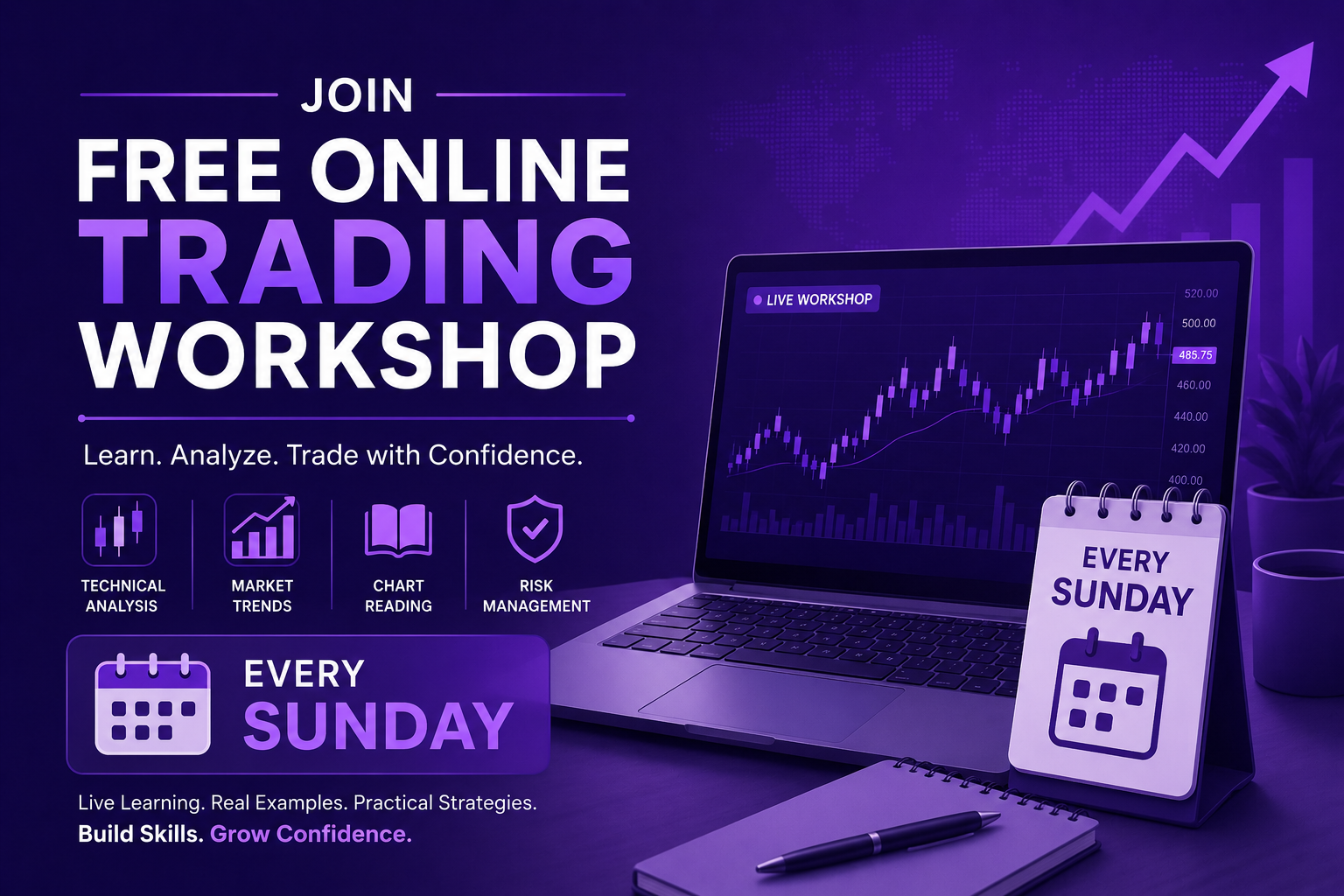
Aceink, led by SEBI-registered stock market analyst Bharath Shankar, hosts a dedicated stock trading webinar every Sunday, providing detailed stock market education for beginners to experts.
During this session, you will study:
- Why traders are struggling and what can be done to rectify it
- What to do to develop a systematic trading strategy
- The way to control emotions and threats
- The step-by-step guide to finding a way to improve consistency
This will help you get out of confusion and into clarity.
Conclusion
The discipline, patience, and organization required to trade make it challenging, not because the market is complex, but because it demands discipline, patience, and planned thinking.
Once you switch to purposeful decision-making, trading becomes more manageable and less stressful.
To achieve this clarity, Aceink offers a free stock market webinar that teaches real market behavior, disciplined execution, and practical learning step-by-step.