If you’re stepping into the stock market, this is one of the first and most important differences you need to get straight.
Most beginners mix up trading and investing. They purchase stocks without a clear plan, blend different methods, and usually see uneven outcomes.
Here’s the real picture:
Trading and investing represent two separate ways of working in the market — different mindsets, different actions, and different results expected.
Let’s go through it step by step.
What is Trading?
Trading means buying and selling stocks in a short time frame to profit from price changes.
The aim stays straightforward:
Grab short-term price moves when they appear
Common types of trading include:
- Intraday trading (same day)
- Swing trading (few days to weeks)
- Short-term trading (weeks to months)
Traders pay close attention to:
- Price action
- Market momentum
- Technical setups
They depend a lot on reading stock charts and following clear strategies.
What is Investing?
Investing involves buying stocks for the long haul with the aim of building wealth over time.
The main attention goes beyond short-term price swings to the following:
- How the business grows
- Future earnings power
- Long-term trends
Investors usually keep stocks for:
- Years
- Sometimes decades
The core idea stays simple: Allow compounding to build results over many years
Key Differences Between Trading and Investing
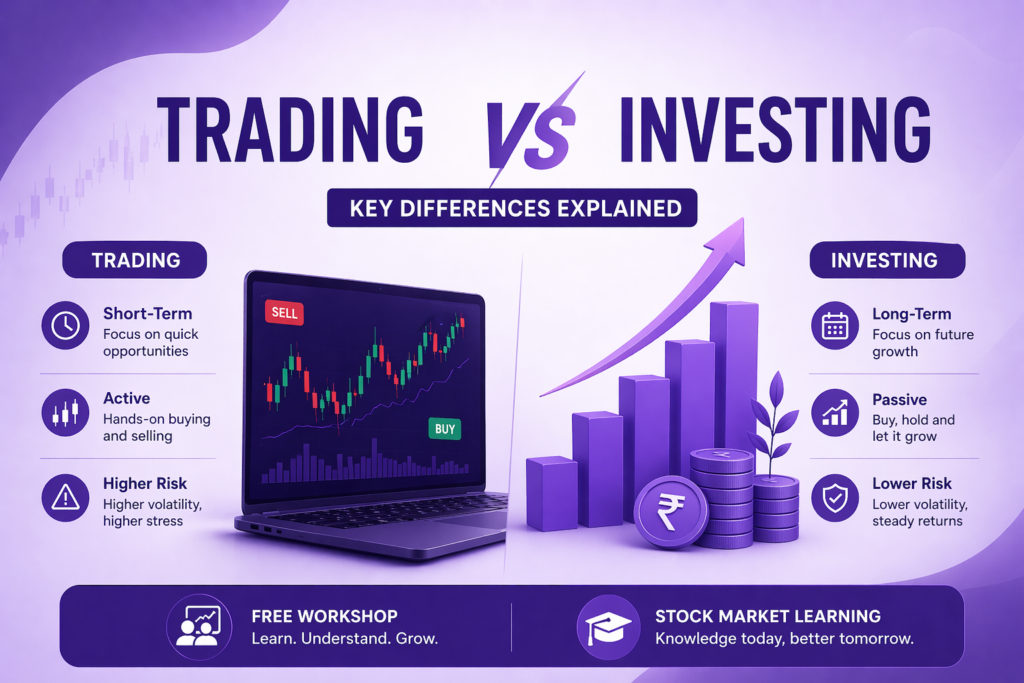
| Basis | Trading | Investing |
| Time Horizon | Short-term (minutes to months) | Long-term (years to decades) |
| Primary Focus | Price movement and momentum | Business growth and fundamentals |
| Approach | Technical analysis and chart reading | Fundamental analysis and valuation |
| Goal | Capture short-term price opportunities | Build long-term wealth through compounding |
| Risk Level | Higher due to frequent market exposure | Relatively stable over long duration |
| Effort Required | Active monitoring and quick decisions | Passive approach with periodic review |
| Decision Making | Entry, stop-loss, and target-based trading | Long-term holding based on company strength |
| Market Involvement | Daily or frequent participation | Occasional monitoring |
| Emotional Impact | Requires high discipline and control | Requires patience and long-term mindset |
| Learning Curve | Requires strong technical understanding | Requires understanding of businesses |
Which One is Better?
This question misses the point.
The question which is worth asking is which one fits your own personality and what you want to achieve?
- If you enjoy quick decisions and staying active in the market → Trading
- If you value patience and stable growth over years → Investing
Many people who have spent years in the market actually practice both — but they keep the two approaches clearly separate.
Why Beginners Get Confused between Trading vs Investing
Most beginners:
- Start trading without knowing how to read charts
- Put money into stocks based on tips instead of proper checks
- Combine trading and investing inside one portfolio
Example:
Buying a stock with the idea of holding it long term, then selling it quickly when the price drops a little
This kind of mix-up often causes losses
Clear understanding makes all the difference.
Skills Required for Trading vs Investing
Here’s what many beginners overlook — success in the market does not come from simply picking trading or investing. It comes from developing the right abilities for whichever path you pick.
Both demand discipline, yet the actual skills needed look quite different.
Skills Required for Trading
Trading depends on quick and accurate action. It rewards careful timing, speed, and strong discipline.
1. Chart Reading & Market Structure
To become a successful trader, one must understand price action, identify price trends, support, and resistance, and live setups. In the absence of this base, all entries are guesses.
2. Risk Management Discipline
Every single trade needs a clear stop-loss and proper position size. Slip up here and one bad trade can cancel out several winning ones.
3. Decision-Making Under Pressure
Prices can shift fast. Traders have to respond quickly but stay logical. Letting emotions take over usually ends in losses.
4. Understanding Momentum & Timing
Figuring out the right moment to enter matters more than simply choosing the stock. Good timing decides whether the trade pays off.
5. Consistency Over Excitement
Serious traders maintain arrangements that they follow regularly rather than pursuing each new strategy. Solid discipline is always better than rushing.
Skills Required for Investing
Investing depends on steady patience. It rewards deep understanding, strong belief in the choice, and the ability to think years ahead.
1. Business Understanding
An investor must learn how a business makes money, where its growth opportunities lie and how it compares to other businesses in the same industry.
2. Financial Analysis Basics
Being aware of revenue patterns, profitability, debt levels and cash flow assists in selecting good businesses.
3. Patience & Long-Term Vision
Real wealth grows slowly. Investors should remain dedicated even when the market is on its upward and downward trends.
4. Portfolio Allocation
Deciding how much money to put in and how to spread it across different stocks helps control risk over many years.
5. Emotional Stability
Markets will always move around. Investors must resist the urge to sell in fear and keep their eyes on the bigger picture.
Learn Trading and Investing the Right Way
A well-organized free stock market learning course helps you understand:
- How trading operates in practice
- How investing creates wealth over time
- When each method makes sense to use
- How to handle risk properly
At Aceink, the goal goes beyond basic ideas and aims for genuine market insight.
Aceink Free Stock Market Workshop: Your Starting Point
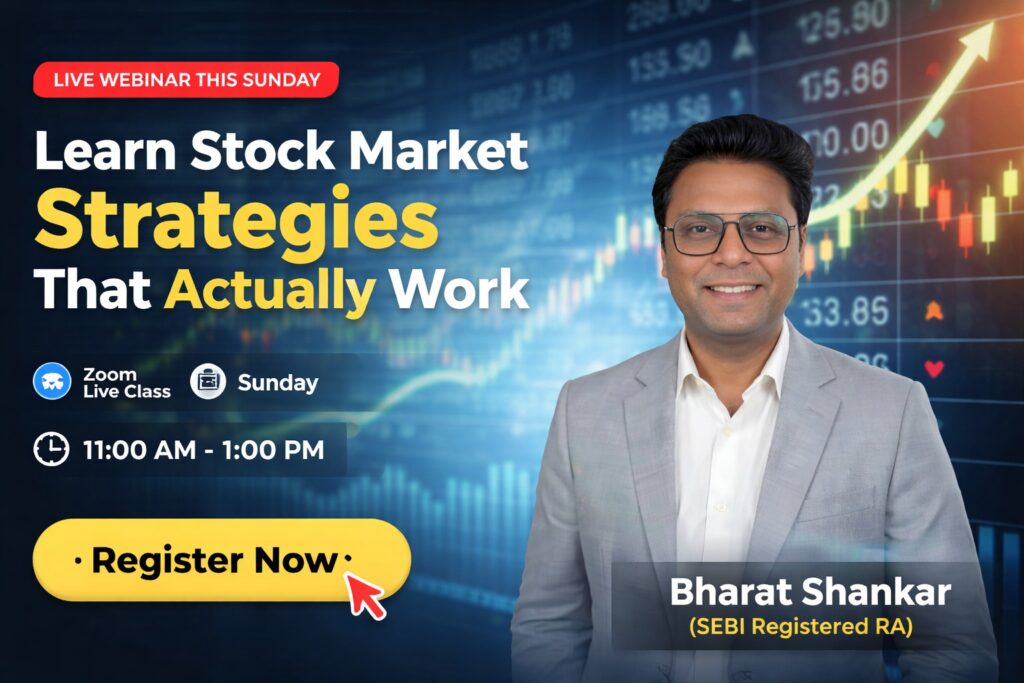
If you still feel unsure about trading versus investing, the smartest first step is a free online stock market workshop.
Aceink provides a free Stock Market training online session led by a SEBI Registered Stock Analyst. In it, you learn:
- The real difference between trading and investing with actual examples
- Basic chart reading and how market structure works
- Ways to handle short-term and long-term chances
- Typical mistakes new traders and investors should avoid
This session skips heavy theory.
It builds clear understanding instead.
Final Thoughts
Trading and investing both offer real power — but only when you apply them with clear thinking and steady discipline.
Without proper knowledge, either one can result in losses.
When handled the right way, both can support steady financial growth.
The secret lies in starting with a solid base.
Aceink, guided by a SEBI Registered Stock Analyst, works to give beginners practical market knowledge through organized and hands-on sessions.
Join the free online stock market workshop and get clear on trading versus investing before you risk any money in the market.
Stop blending the two approaches.
Start making choices based on real understanding.
Most traders lose money due to common issues like lack of knowledge, emotional decisions, poor risk management, and relying on tips instead of proper analysis. Understanding these mistakes can help traders improve their approach, stay disciplined, and build a more structured trading strategy.