
One of the most common and popular trading strategies in the stock market is breakout trading, as breakouts may generate a rapid momentum and a strong trading action. A lot of traders look at a stock to get beyond the resistance, and then jump in with a lot of enthusiasm and hope it will go on instantly.
Then the truth strikes. The stock turns around, goes down into the range and captures traders who have either entered late or without confirmation.
This is what leads to the beginners thinking that breakout trading is ineffective. The reality is in another way. Breakout trading is successful, yet the majority of traders tackle the breakout wrongly.
It is not the breakout itself that is the issue. The issues are poor breakout selection, emotional entries, and structure. The biggest step towards enhancing breakout trading consistency is understanding why most breakouts fail.
What is a Breakout in Trading?
A breakout occurs when the price breaks out of a significant support or resistance level in a direction that is momentum.
This normally indicates a change in the market pressure where either the buyers or sellers attain power and price tries to begin a new stronger directional trend.
Breakouts frequently occur after a consolidation due to the market developing tension within an area until eventually exploding.
Why Traders Love Breakout Trading
Breakout trading has attracted the attention of a number of traders since its benefits include:
- Strong momentum opportunities
- Clear entry zones
- Good risk-reward setups
- Potential fast price movement
Properly traded, breakouts can be high-probability formations. Not all breakouts are real.
Why Most Breakouts Fail
It is important to have an understanding of failed breakouts since the fake moves are widespread in the market.
Weak Breakout Confirmation
Most traders will jump into the market when the price reaches resistance without the necessary confirmation.
An actual breakout typically requires:
- Powerful candles close above the level
- Perseverance forward against resistance
- Market involvement and momentum
Without confirmation, many breakouts fail quickly.
Low Volume Participation
Volume is significant in breakout reliability.
Price moves will not have much strength and will not be sustainable when they break a level without strong participation.
Breakouts with low volumes tend to survive due to the poor participation of institutions.
Emotional FOMO Entries
One of the largest causes of getting trapped amongst traders is the fear of missing out.
Rather than waiting to see good setup quality, traders aggressively pursue price following a breakout candle.
This forms bad entries and emotional choices.
Breakouts Against Market Trend
Elevated breakouts in trading against the general direction of the market decrease the chance substantially.
To illustrate, bullish breakouts under weak market conditions usually do not work since market pressure is negative in a bigger market.
Breakouts from Weak Structure
All of the resistance levels are not meaningful.
When breakout level is weak in terms of historical significance or less prompt price responses, the breakout itself might not be strong.
Lack of Retest Confirmation
Powerful breakouts usually re-test the breakout area and then proceed to go higher.
Most traders neglect this crucial behavior and jump into it in the first move, without a requisite boosting risk.
Signs of a Strong Breakout
Although breakouts that are unsuccessful are typical, successful breakouts tend to exhibit distinct features.
Strong Consolidation Before Breakout
When there is tight consolidation around resistance, it is a good indicator of a build-up of pressure within the market.
The healthier the consolidation can be, the greater the potential of the breakout may be.
Strong Closing Candle
The breakout candle must be made with a strong close beyond the resistance zone rather than when it crosses it slightly.
Volume Expansion
Breakouts are typically strong and increasing in volume since market participation is rising as the momentum grows.
Market Trend Alignment
Breakouts that are consistent with the overall trend tend to have higher continuation chances.
Successful Retest
A successful breakout confirmation occurs when price reenters the breakout area and is able to hold on before proceeding upwards.
How to Trade Breakouts Properly
Breakout trading is much more useful when done in a disciplined and patient manner.
Wait for Confirmation Instead of Anticipation
Prevent premature predictions on the breakouts.
Wait until the market demonstrates strength in the first place by good candle close and momentum verification.
Focus on Quality Levels
The breakouts can only be traded out of sound support and resistance areas that are distinctly marked by that history.
Observe Volume Carefully
Breakouts that are backed by high volume tend to be more reliable compared to weak-volume breaks.
Use Proper Risk Management
All breakout failures are possible. This is the reason why it is necessary to place stop-loss.
Risk management will shield traders against emotional losses and huge losses.
Avoid Chasing Extended Breakout Candles
When the price moves too aggressively following breakout, late entries are likely to create poor risk-reward opportunities.
Patience enhances quality of trade.
Learn to Identify Fake Breakouts
Some of the warning signs of fake breakouts include:
- Weak candle close
- Low volume
- Immediate rejection
- Inability to maintain beyond breakout zone
Being aware of these indications assists traders to escape traps.
Real Example of Breakout Failure
Suppose a stock in the market trades below the ₹500 resistance over a few days. Suddenly, the price rises above ₹500 intraday and traders start buying aggressively.
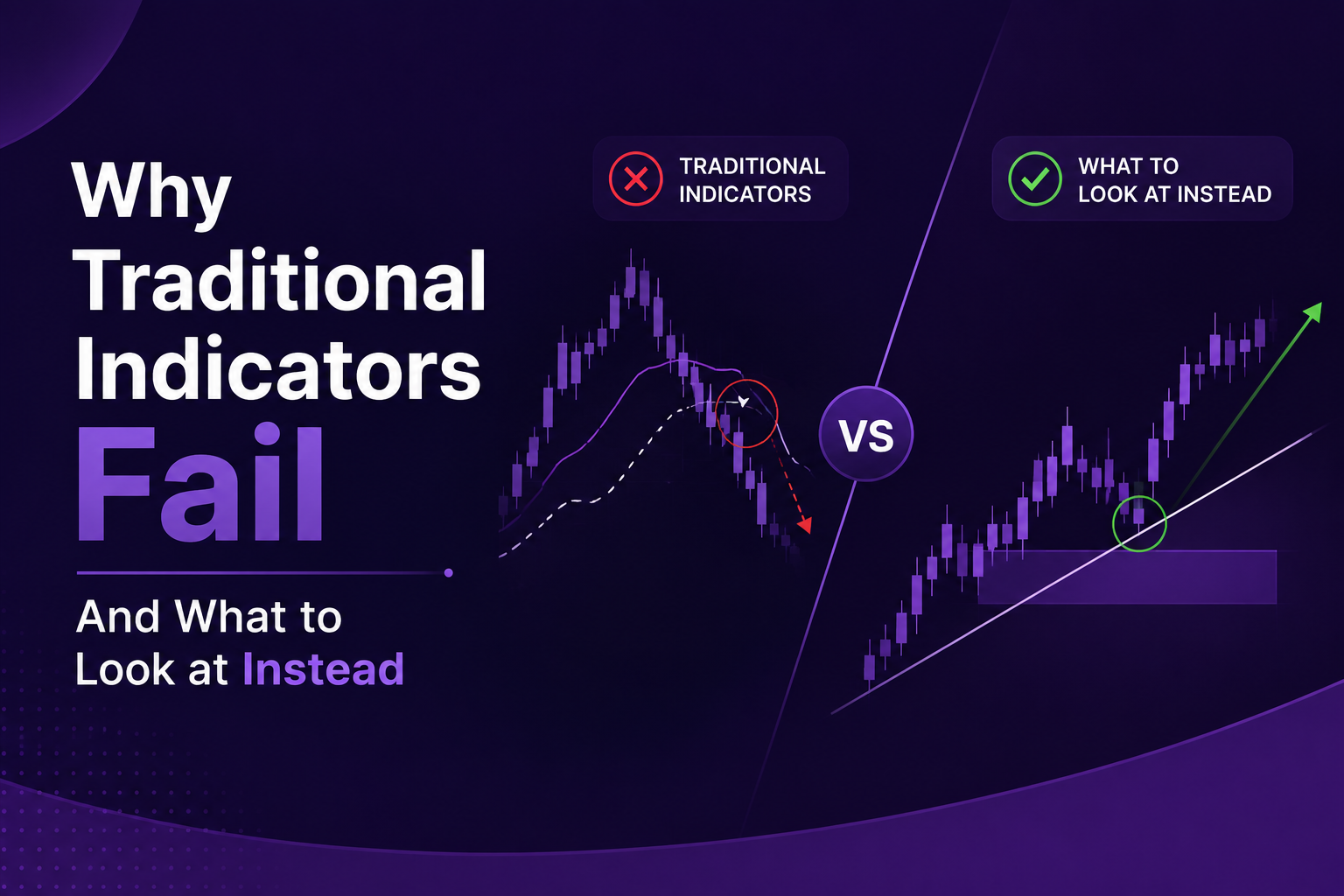
Yet volume is feeble and the candle has closed below the resistance. On the following day, price declines further into the range.
It is a typical failed attempt to breakout since confirmation and strength were not there.
Real Example of Strong Breakout Setup
So suppose instead that another stock is narrowing up to resistance in two weeks.
Price then breaks out of resistance into a strong bullish candle and increasing volume. On the following day, price retests the breakout zone and manages to hold before proceeding higher.
This setup shows:
- Strong structure
- Volume confirmation
- Successful retest
- Trend continuation strength
Such is the appearance of disciplined breakout trading.
Why Breakout Understanding is Important in Stock Market Learning
Breakout trading trains traders in the interaction between momentum, structure and market psychology.
It teaches traders to be patient and to confirm before get excited and running in a hurry.
It is why breakout analysis is a significant aspect of Stock Market Learning practice.
Learn Breakout Trading with Practical Market Understanding
Aceink, a company run by the SEBI Registered Stock Market Analyst, Bharath Shankar, assists traders in learning breakout trading by reading charts and by learning the market in a systematic way.
As opposed to random breakout tips, the attention is on understanding:
- The formation of real breakouts
- The best way to prevent fakeouts
- Determining how to detect strong market structure
- A disciplined trader in regards to breakout opportunities
This pragmatic method assists traders to make better choices other than basing on emotional entries.
Why Aceink’s Free Webinar Helps Traders Understand Breakouts Better
Most novices have learned the theory of breakout, but find it difficult to put into practice in real markets. Aceink’s Free Stock Trading Webinar helps traders learn technical analysis and understand the real behavior of market breakouts through practical examples, simple strategies, and easy-to-follow trading concepts.
The webinar helps traders:
- Determine more powerful breakout arrangements
- Improve breakout timing
- Understand confirmation properly
- Avoid emotional breakout entries
- Develop discipline in trading
This yields deeper practical knowledge as opposed to superficial learning.
Conclusion
Breakout trading is hard to ignore and only when executed methodically, patiently and with validation. The majority of breakouts do not succeed as the traders rely on excitement rather than quality.
Once you can learn to utilize trend alignment, volume, structure, and disciplined execution then breakout trading will be much more dependable.
Aceink supports traders to develop this practical perception by the offer of its Free Stock Trading Webinar where breakout strategies and technical analysis and disciplined market execution are aided with clarity of the real markets by SEBI Registered Stock Market Analyst Bharath Shankar.