
The majority of traders get into the market with enthusiasm, but without planning. They are aware of what stock they would like to trade, but they do not know where to enter, where to exit or how much risk they should take. It is also one of the largest reasons why beginners can hardly make it in the stock market.
No plan trading makes all decisions emotional decisions. Fear, greed, and confusion reign supreme since there is no evident structure to be followed.
That is altered by a trading plan. It instills discipline, enhances decision-making, and assists traders to look at the market with a clear vision.
No matter whether you are an amateur or a beginner trader, one of the most significant steps you can achieve towards long-term regularity is to develop a decent trading strategy.
What is a Trading Plan?
A trading plan refers to a devised system of rules, which will guide how to approach the market. It encompasses all the stages of trade selection, risk management and exit strategy.
It is not merely the matter of locating trades. It is concerning the creation of a process that would make your decisions continuous.
A trading plan will provide answers to the following questions:
- What type of stocks shall I trade?
- What will I trade as a setup?
- When will I enter?
- Where will I exit?
- How much risk shall I have?
This type of structure eliminates conjecture.
Why Every Trader Needs a Trading Plan
The market is dynamic. Devoid of a strategy, decisions become reactive.
An appropriate trading plan will assist you:
- Avoid emotional entries
- Maintain discipline
- Improve consistency
- Control risk
- Develop performance trust
Emotions do not play a factor in the activities of professional traders. They are structure-dependent.
How to Create a Trading Plan Step-by-Step
Developing a trading plan does not necessarily need to be complex. It only has to be straightforward and sensible.
Step 1: Define Your Trading Style
The initial one is to determine what type of a trader you wish to become.
The trading style available should reflect the time you have, your personality, as well as your risk tolerance.
For example:
- Active traders will be provided with intraday trading
- Medium-term setups of swing trading
- Long-term opportunities: Positional trading
The selection of the appropriate style brings about clarity.
Step 2: Define Your Market Setup
In a trading plan you must specify the specific kind of setup you will be trading.
This could be:
- Breakout setups
- Pullback setups
- Trend-following setups
- Reversal of support and resistance
It is aimed at not trading everything, but rather focusing on one framework.
Step 3: Create Entry Rules
Entry rules stipulate at what point you are going to venture into a trade.
These regulations ought to be narrow and explicit.
For example:
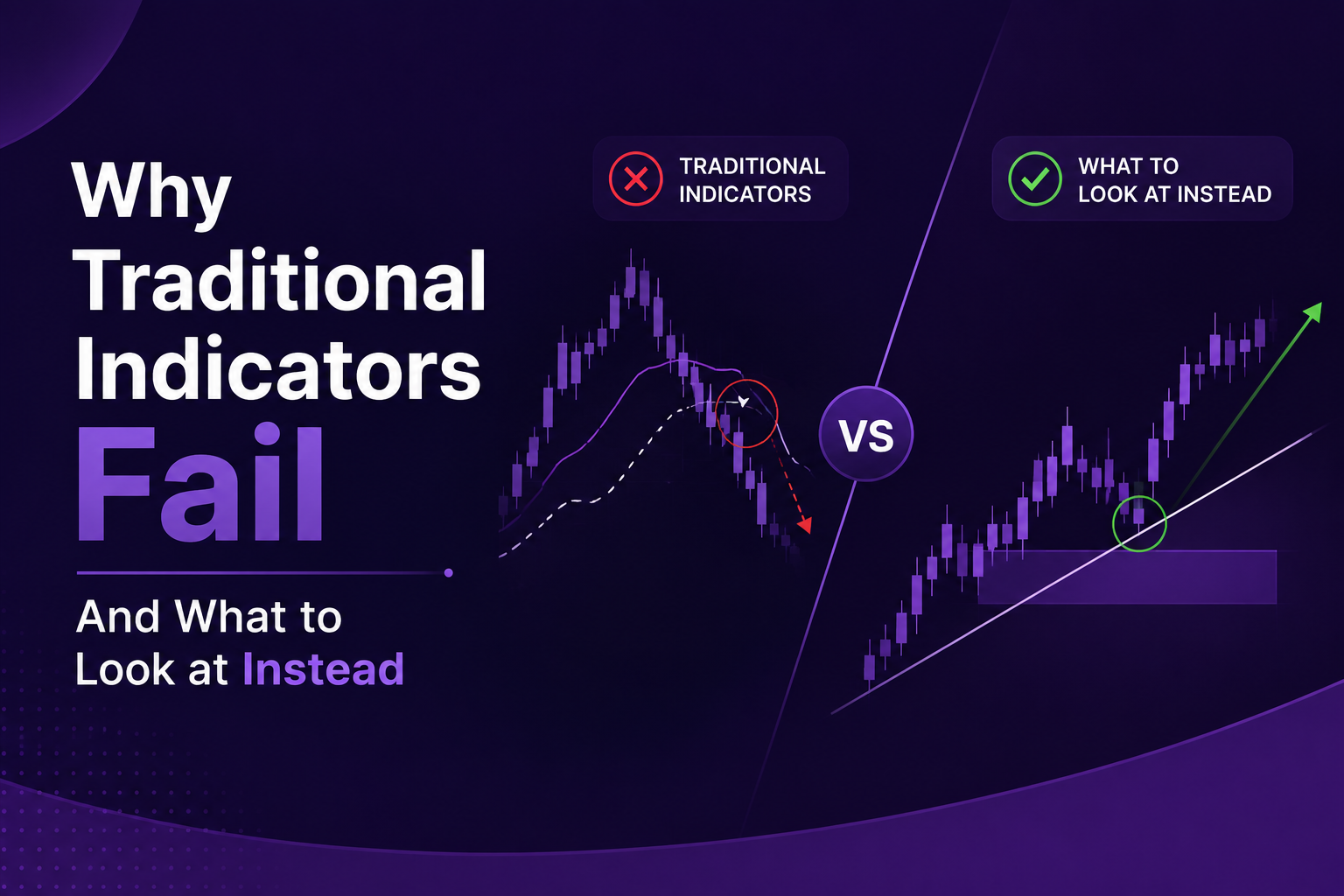
- Above resistance with confirmation
- Pullback into support with bullish candle
- Bounce on the trendline with the volume confirmation
Obvious regulations decrease misunderstandings.
Step 4: Define Stop-Loss Rules
Any business requires risk insurance.
You must set your stop-loss based on the structure and not on emotions.
Examples include:
- Below support
- Below pullback low
- By the resistance in short trades
A stop-loss saves capital and ensures the limit of the losses.
Step 5: Define Target Rules
A trading plan must always have a specific target.
Targets can be based on:
- Resistance zones
- Risk-reward ratio
- Trend continuation levels
Being aware of your target (before entry) enhances discipline.
Step 6: Set Risk Per Trade
The most critical aspect of a trading plan is to determine the amount of money to place at risk on any particular trade.
Professional traders run a predetermined percentage, rather than random amounts.
It cushions the capital when situations are losing and it brings uniformity in the long run.
Step 7: Create Trade Management Rules
A trade does not cease at entry. You must have rules in handling it.
This includes:
- Partial profit booking
- Trailing stop-loss
- Exit on weakness
Trade management enhances control.
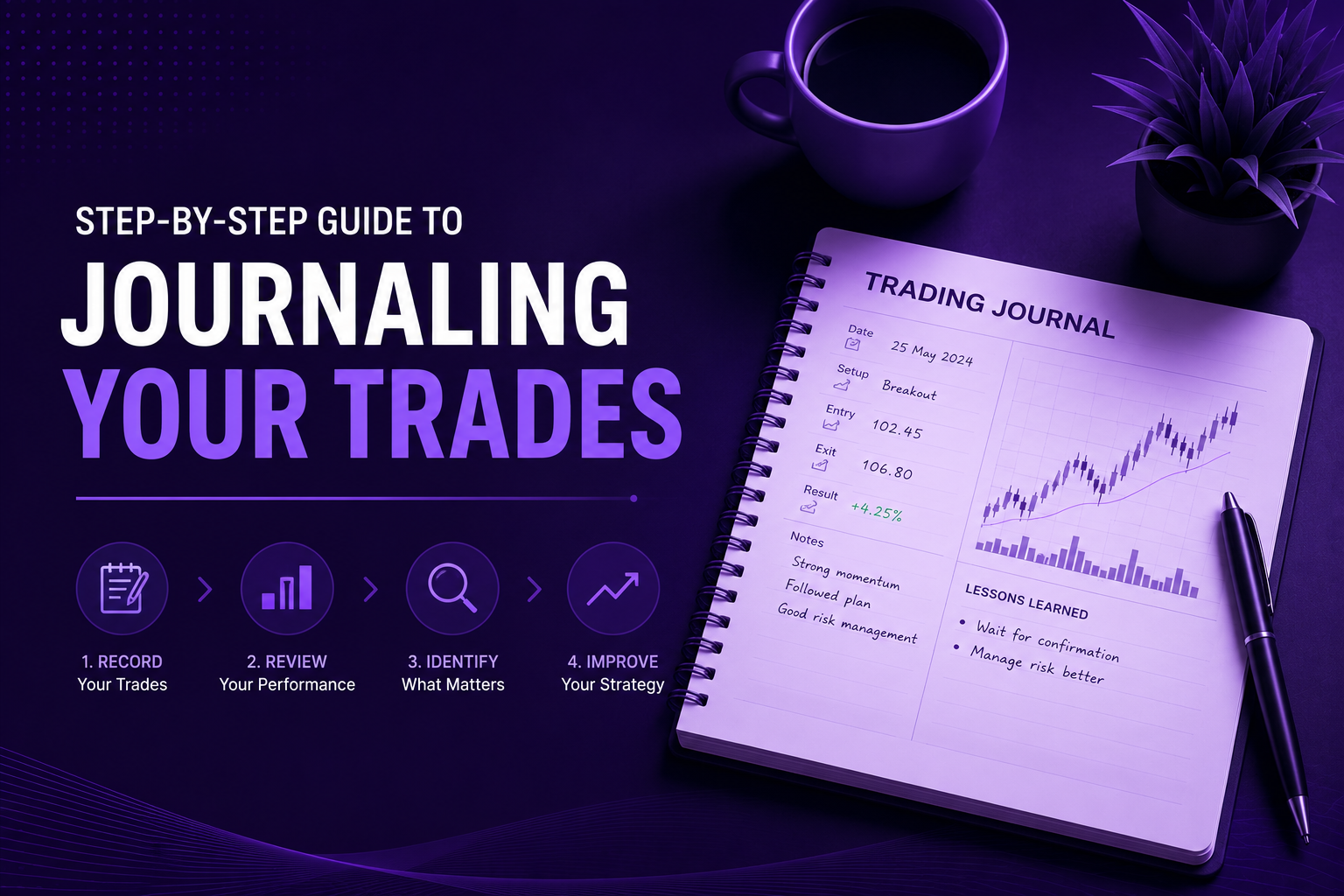
Step 8: Keep a Trading Journal
A trading journal is used to assist you to review your decision.
It shows:
- What worked
- What failed
- Where mistakes happened
This is among the quickest methods by which one can enhance.
Example of a Simple Trading Plan
An example of a trading plan is as follows:
- Trading style: Swing trading
- Configuration: Breakout with volume
- Entry: Right above resistance
- Stop-loss: Under the breakout level
- Target: 1:2 risk-reward minimum
- Risk per trade: Fixed capital percentage
Such a plan brings about clarity and structure.
Common Mistakes While Building a Trading Plan
Most novices do too elaborate or unrealistic plans.
Common mistakes include:
- Trading excessively arranged
- No stop-loss rules
- Changing the plan frequently
- Too much capital: risking
- Ignoring trade review
In order to achieve a good plan, this plan must be simple enough to adhere to.
How to Upgrade Your Trading Plan from Beginner to Pro
The strategy of a beginner usually includes only the entries. A job plan concentrates on the entire process.
To enhance your plan:
- Include more entry filters
- Improve risk management
- Pay attention to high-probability set-ups
- Review trades weekly
- Remove emotional decisions
Expansion is achieved by enrichment.
Why Trading Plans are Important in Stock Market Learning
A trading plan educates traders on how to think in a systematic way.
Rather than responding to the market, you study how to go through a process. This brings about discipline, consistency and enhanced decision making.
This is why trading strategies are the major element of realistic Stock Market Learning.
Why Choose Aceink for Free Stock Market Workshop and Become Expert?
Aceink is the best Stock recommendation company headed by SEBI Approved Stock Market Analyst Bharath Shankar, who helped traders gain practical market knowledge through structured trading education, live market analysis and disciplined strategy-building designed as a beginner and serious trader.
Learn How to Build a Practical Trading Plan
Learn how expert traders develop systematic strategies to regularly execute in the market.
Improve Trade Discipline
Aceink assists traders establish stronger behaviors regarding entry, exit and management of risks.
Learn Practical Market Strategies
Gain hands-on experience with breakouts, pullbacks, trend-following, and structured setups.
Learn from SEBI Registered Stock Market Analyst
Learn under the guidance of Bharath Shankar and get on the ground lessons about the stock market.
Free Stock Market Learning Opportunity
Free Stock Market Webinar by Aceink assists traders to comprehend the trading plans, strategies and market structure in an easy and simplified form.
Conclusion
A trading plan forms the pillar of disciplined trading. It eliminates confusion, risk management, and brings about consistency in decision-making. The lack of a plan turns the trading into something emotional. Trading is organised with a plan.
Aceink assists traders to develop this discipline by its Free Stock Market Webinar where practical trading plans, stock analysis and strategy implementation are outlined with real market knowledge. Developing a good trading plan can entirely transform the manner in which you deal with the stock market.