The majority of traders spend millions of hours searching for superior indicators, new strategies, and tips to succeed in the stock market. Nevertheless, a Trading Journal is often overlooked as one of the most effective tools for enhancing trading performance.
Experienced traders know that long-term success is achieved through continuous improvement. They do not look only at profits and losses. They debate their choices, identify their mistakes, and seek methods to improve their implementation.
A Trading Journal that is kept up to date helps traders understand what is working and what is not, as well as where they should improve. It makes trading more of an analysis- and discipline-based process rather than a guessing game.
When trading consistently, if emotional errors or just becoming a more disciplined trader is your aim, then knowing how to keep a proper trading journal is necessary.
What is a Trading Journal?
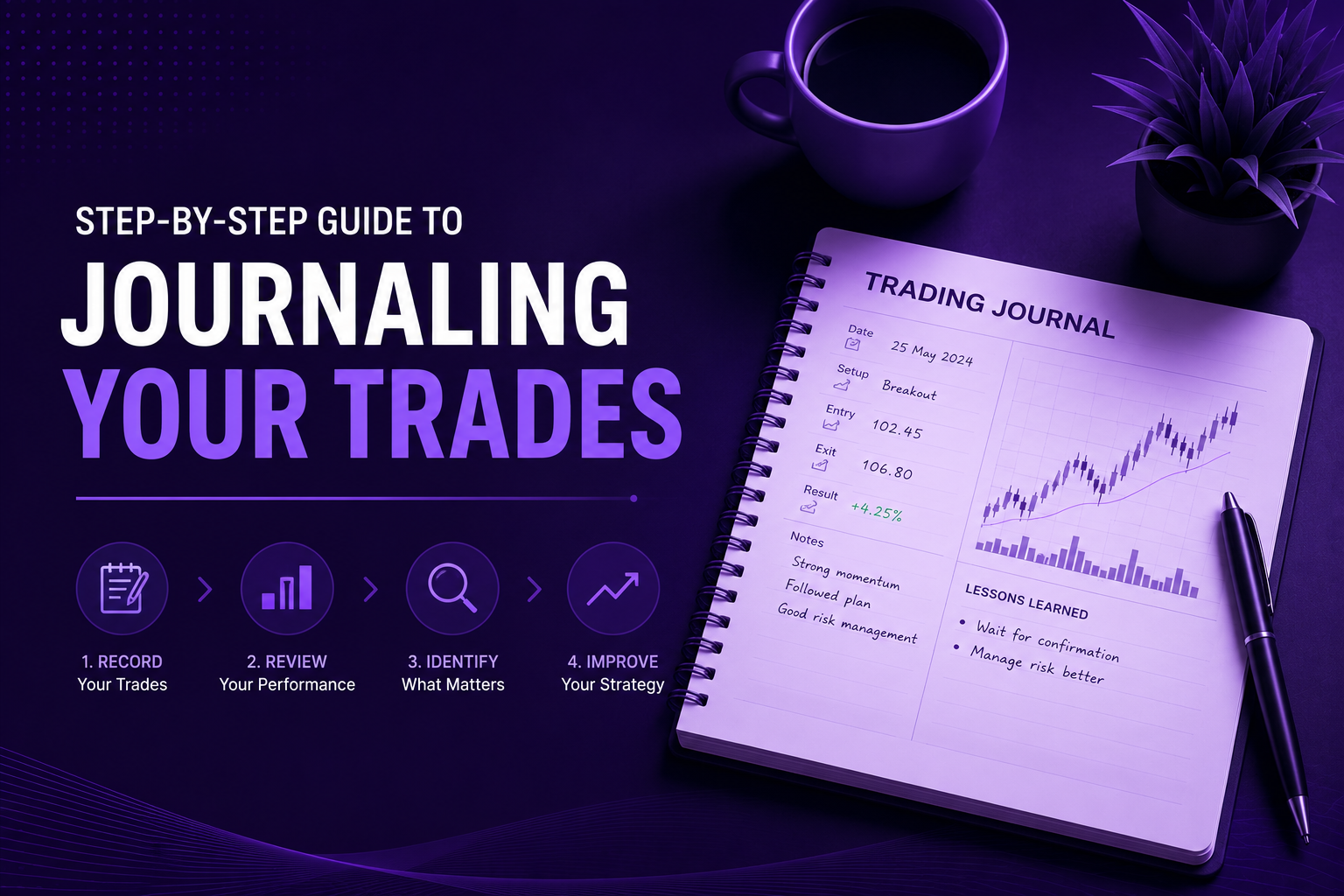
A Trading Journal is a detailed record of every trade you take in the market.
Instead of simply recording profits and losses, a journal helps track:
- Entry and exit decisions
- Risk management
- Trade setups
- Market conditions
- Emotional state
- Lessons learned
Over time, this information becomes one of the most valuable resources for improving trading performance.
Why Every Trader Needs a Trading Journal
The importance of journaling is underestimated by many traders, who think they will remember their errors. The truth is not so. Most of the traders make the same mistakes repeatedly without any documentation.
Improves Trading Discipline
A trading journal creates accountability. When traders know they must review every decision later, they are more likely to follow their trading plan and avoid impulsive decisions. Strong trading discipline often begins with consistent journaling.
Helps Identify Repeated Trading Mistakes
Many traders lose money because they continue making the same mistakes. A journal helps reveal patterns such as:
- Entering trades too early
- Exiting winners too quickly
- Ignoring stop-losses
- Chasing breakouts emotionally
Recognizing these patterns is the first step toward improvement.
Improves Trading Psychology
Accountability is created by a trading journal. Traders are more likely to adhere to their trading plan and not make impulsive decisions when they are aware that they will be reviewing all their decisions in the future. Good trading discipline frequently starts with regular journaling.
Tracks Trading Performance
Without proper records, it is difficult to know whether a strategy is truly working. Journaling allows traders to measure:
- Win rate
- Average profit
- Average loss
- Risk-reward performance
- Strategy effectiveness
This creates a more objective view of trading performance.
Builds Trading Consistency
Coherence is achieved through the repetition of good habits and the discarding of negative habits. The trading journal helps traders focus on process improvement rather than quick results. This enhances consistency in trading gradually.
What Should You Record in a Trading Journal?
A general-purpose trading journal must be able to record technical information and psychological information.
Entry Price
Note down the particular price at which the trade has been made. This helps assess the level of entries.
Exit Price
Record in which the trade was closed and compare it with the plan.
Stop Loss
Always note down the level of stop-loss at which the trade takes place. This is useful in risk management assessment in trading.
Risk-Reward Ratio
Document the expected reward compared to the amount being risked. In the long run, this helps determine whether the trades are good opportunities.
Trade Setup
Record the reason for entering the trade. Examples include:
- Breakout setup
- Pullback setup
- Trend continuation
- Support-resistance trade
- Momentum trade
This makes trade analysis easier later.
Emotional State
Many traders skip this section, but it is extremely valuable. Ask yourself:
- Was I confident?
- Was I fearful?
- Was I chasing a move?
- Was I frustrated after a previous loss?
This helps identify emotional trading patterns.
Lessons Learned
Every trade teaches something. Record key observations and lessons after each trade, regardless of whether it was profitable or not.
Step-by-Step Guide to Maintaining a Trading Journal
Following a structured process makes journaling much easier.
Step 1: Create a Journal Format
Use a spreadsheet, notebook, or journaling software. The format matters less than consistency.
Step 2: Record Every Trade Immediately
Do not rely on memory. Document trade details as soon as possible after execution.
Step 3: Capture Screenshots
Save chart screenshots showing:
- Entry
- Exit
- Setup structure
- Market conditions
Visual records improve learning significantly.
Step 4: Record Your Reasoning
Explain why you entered the trade. This helps determine whether decisions followed your trading plan.
Step 5: Analyze the Outcome
After the trade ends, review:
- What worked
- What failed
- Whether the setup was valid
- Whether the execution was disciplined
Step 6: Review Weekly
Set aside time each week to review your journal.
Look for recurring patterns in:
- Winning trades
- Losing trades
- Emotional behavior
- Strategy performance
Step 7: Adjust and Improve
Use the insights from your journal to refine your trading process and eliminate repeated mistakes.
Common Trading Journal Mistakes to Avoid
Many traders start journaling but fail to use it effectively. Avoid these mistakes:
- Recording only profitable trades
- Ignoring emotional notes
- Reviewing journals rarely
- Focusing only on profits
- Failing to identify recurring mistakes
How Reviewing Your Journal Improves Trading Results
A journal becomes powerful when reviewed regularly. Consistent review helps traders:
- Improve decision-making
- Strengthen risk management
- Enhance trading discipline
- Reduce emotional mistakes
- Improve trading consistency
Over time, small improvements create significant performance gains.
Why Most Beginners Skip Journaling
Most novices feel that they do not need to engage in journaling as it does not directly translate into profits.
But good merchants know that they can only get better by studying themselves.
One of the most useful tools for long-term development is a Trading Journal, which assists traders in learning from the winning and losing trades.
Learn Professional Trading Habits Through Aceink’s Free Stock Market Webinar
Many successful traders follow structured routines that include journaling, risk management, trade reviews, and disciplined market analysis.
Aceink’s Free Stock Market Webinar helps participants understand these professional habits through practical market education.
Led by SEBI Registered Research Analyst Bharath Shankar, the webinar covers:
- Trading discipline
- Trading psychology
- Technical analysis
- Risk management in trading
- Trade analysis techniques
- Trading consistency frameworks
Participants also learn how professional traders review their performance and improve decision-making over time.
Conclusion
Not just a Trading Journal is a record of gains and losses. It is an effective instrument that assists traders in enhancing discipline and trading psychology, recognizing common errors, and establishing long-term trading consistency.
The majority of traders focus on developing improved strategies without considering the importance of self-analysis. The thing is, knowing yourself and your actions often yields greater improvements than switching approaches every now and then.
With a well-organized trading journal and regular review, traders can make better decisions, take wiser risks, and improve their overall trading performance.
In a bid to understand more about trading discipline, risk management, technical analysis, and professional trading habits, attend the Free Stock Market Webinar by Aceink every Sunday, hosted by SEBI-registered Research Analyst Bharath Shankar.