
Why Most Breakouts Fail (And How to Trade Them)
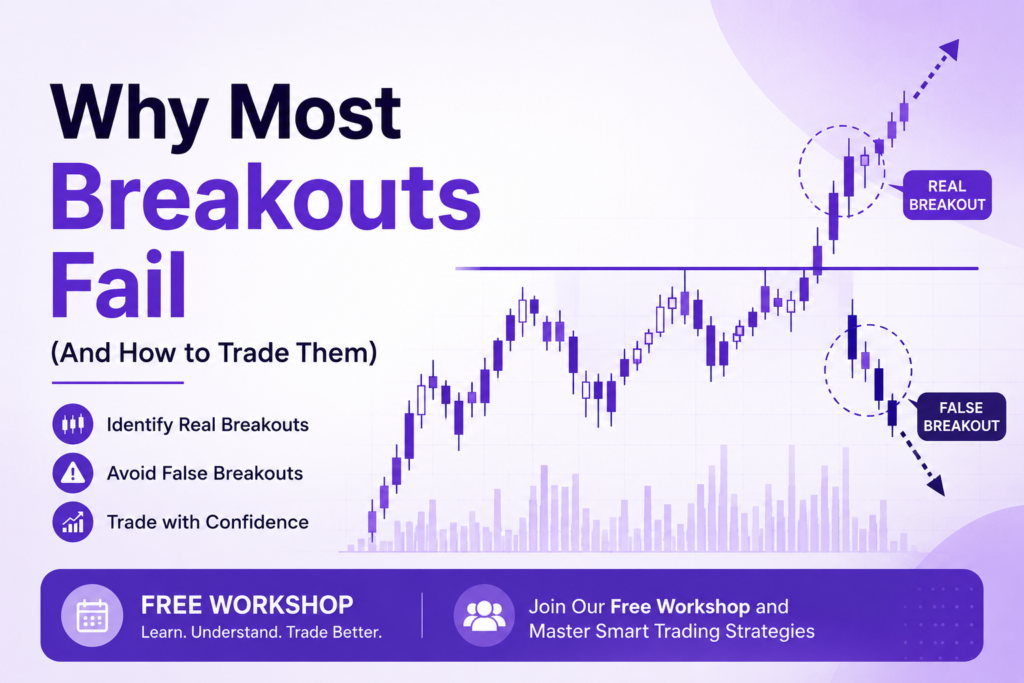
One of the most common and popular trading strategies in the stock market is breakout trading, as breakouts may generate a rapid momentum and a strong trading action. A lot of traders look at a stock to get beyond the resistance, and then jump in with a lot of enthusiasm and hope it will go on instantly. Then the truth strikes. The stock turns around, goes down into the range and captures traders who have either entered late or without confirmation. This is what leads to the beginners thinking that breakout trading is ineffective. The reality is in another way. Breakout trading is successful, yet the majority of traders tackle the breakout wrongly. It is not the breakout itself that is the issue. The issues are poor breakout selection, emotional entries, and structure. The biggest step towards enhancing breakout trading consistency is understanding why most breakouts fail. What is a Breakout in Trading? A breakout occurs when the price breaks out of a significant support or resistance level in a direction that is momentum. This normally indicates a change in the market pressure where either the buyers or sellers attain power and price tries to begin a new stronger directional trend. Breakouts frequently occur after a consolidation due to the market developing tension within an area until eventually exploding. Why Traders Love Breakout Trading Breakout trading has attracted the attention of a number of traders since its benefits include: Properly traded, breakouts can be high-probability formations. Not all breakouts are real. Why Most Breakouts Fail It is important to have an understanding of failed breakouts since the fake moves are widespread in the market. Weak Breakout Confirmation Most traders will jump into the market when the price reaches resistance without the necessary confirmation. An actual breakout typically requires: Without confirmation, many breakouts fail quickly. Low Volume Participation Volume is significant in breakout reliability. Price moves will not have much strength and will not be sustainable when they break a level without strong participation. Breakouts with low volumes tend to survive due to the poor participation of institutions. Emotional FOMO Entries One of the largest causes of getting trapped amongst traders is the fear of missing out. Rather than waiting to see good setup quality, traders aggressively pursue price following a breakout candle. This forms bad entries and emotional choices. Breakouts Against Market Trend Elevated breakouts in trading against the general direction of the market decrease the chance substantially. To illustrate, bullish breakouts under weak market conditions usually do not work since market pressure is negative in a bigger market. Breakouts from Weak Structure All of the resistance levels are not meaningful. When breakout level is weak in terms of historical significance or less prompt price responses, the breakout itself might not be strong. Lack of Retest Confirmation Powerful breakouts usually re-test the breakout area and then proceed to go higher. Most traders neglect this crucial behavior and jump into it in the first move, without a requisite boosting risk. Signs of a Strong Breakout Although breakouts that are unsuccessful are typical, successful breakouts tend to exhibit distinct features. Strong Consolidation Before Breakout When there is tight consolidation around resistance, it is a good indicator of a build-up of pressure within the market. The healthier the consolidation can be, the greater the potential of the breakout may be. Strong Closing Candle The breakout candle must be made with a strong close beyond the resistance zone rather than when it crosses it slightly. Volume Expansion Breakouts are typically strong and increasing in volume since market participation is rising as the momentum grows. Market Trend Alignment Breakouts that are consistent with the overall trend tend to have higher continuation chances. Successful Retest A successful breakout confirmation occurs when price reenters the breakout area and is able to hold on before proceeding upwards. How to Trade Breakouts Properly Breakout trading is much more useful when done in a disciplined and patient manner. Wait for Confirmation Instead of Anticipation Prevent premature predictions on the breakouts. Wait until the market demonstrates strength in the first place by good candle close and momentum verification. Focus on Quality Levels The breakouts can only be traded out of sound support and resistance areas that are distinctly marked by that history. Observe Volume Carefully Breakouts that are backed by high volume tend to be more reliable compared to weak-volume breaks. Use Proper Risk Management All breakout failures are possible. This is the reason why it is necessary to place stop-loss. Risk management will shield traders against emotional losses and huge losses. Avoid Chasing Extended Breakout Candles When the price moves too aggressively following breakout, late entries are likely to create poor risk-reward opportunities. Patience enhances quality of trade. Learn to Identify Fake Breakouts Some of the warning signs of fake breakouts include: Being aware of these indications assists traders to escape traps. Real Example of Breakout Failure Suppose a stock in the market trades below the ₹500 resistance over a few days. Suddenly, the price rises above ₹500 intraday and traders start buying aggressively. Yet volume is feeble and the candle has closed below the resistance. On the following day, price declines further into the range. It is a typical failed attempt to breakout since confirmation and strength were not there. Real Example of Strong Breakout Setup So suppose instead that another stock is narrowing up to resistance in two weeks. Price then breaks out of resistance into a strong bullish candle and increasing volume. On the following day, price retests the breakout zone and manages to hold before proceeding higher. This setup shows: Such is the appearance of disciplined breakout trading. Why Breakout Understanding is Important in Stock Market Learning Breakout trading trains traders in the interaction between momentum, structure and market psychology. It teaches traders to be patient and to confirm before get excited and running in a hurry. It is why breakout analysis is a significant aspect of Stock Market Learning practice. Learn Breakout Trading with
Best Way to Learn Technical Analysis (Avoid Wasting Time)
Most new traders lose months trying to master technical analysis since they use the wrong method. They switch between random YouTube clips, pick up assorted indicators, and switch strategies every few days without grasping how markets really operate. The outcome brings confusion, irritation, and too much scattered information. Rather than gaining a clear understanding, they simply memorize tools without reading price action. The fact is straightforward: to learn technical analysis properly, you need an organized plan, hands-on chart study, and steady direction. Technical analysis stays straightforward once you approach it right. The main issue comes when traders pick it up in a random, disorganized manner. This guide shows you the smartest path to learn technical analysis and skip unnecessary confusion. What is Technical Analysis? Technical analysis means studying price charts, market patterns, momentum, and how traders act to figure out where the market might head next. Rather than relying just on news or views, technical analysis lets traders examine: The purpose is to make better choices by reading charts and understanding market layout. Why Most People Fail to Learn Technical Analysis Properly Many beginners run into problems because they chase quick fixes instead of creating solid basics. Common mistakes include: This leads to mixed-up thinking instead of clear insight. To really learn technical analysis, you must follow a clear step-by-step method instead of grabbing information at random. Best Way to Learn Technical Analysis Without Wasting Time Technical analysis gets much simpler when you follow the right order. Start with Market Structure First Before you touch indicators, get familiar with how the market actually shifts. Study ideas such as: This builds the base you need for proper chart study. Many beginners head straight to indicators without learning trend patterns, and that causes issues down the line. Learn Support and Resistance Properly Support and resistance rank among the key ideas in technical analysis. These areas let traders spot: A solid grasp of support and resistance boosts your ability to read charts with real confidence. Focus on Price Action Before Indicators Price action shows you exactly how buyers and sellers interact in the market. Before you add complex indicators, study: This method lets traders see market psychology straight from the chart itself. Learn Indicators One by One Many traders add loads of indicators at the same time. That creates mess and mixed signals. Instead, work on one indicator at a time. Begin with: The aim is not to memorize every tool. The aim is to see how they back up your overall market reading. Practice Chart Reading Daily Technical analysis grows stronger with regular watching and practice. Set aside time each day to review charts and watch how price behaves near key levels. This daily work helps traders: Steady practice stands as one of the quickest routes to learn technical analysis well. Learn Through Real Market Examples Book knowledge by itself falls short. Many traders get the ideas on paper but stumble when they try them in actual trading. That explains why hands-on examples matter so much during technical analysis study. This is why organized classes and live sessions prove useful, since they explain ideas using current market cases. Avoid Depending Completely on Indicators Indicators serve as helpers, not crystal balls. Many beginners think that indicators by themselves can promise winning trades. That view sets up false hopes. Good technical analysis always mixes: This produces well-rounded analysis. Learn Risk Management Alongside Technical Analysis Technical analysis points out chances, but risk management keeps your money safe. No setup succeeds every single time. That is why traders have to master: Without risk management, even strong technical analysis loses its power. Learn Technical Analysis for Free with Practical Understanding Aceink, run by SEBI-registered stock market analyst Bharath Shankar, works to give traders real technical analysis skills through clear and organized lessons. Instead of loading charts with extra indicators, the main effort goes toward showing traders how price movement, trend, support-resistance, and momentum behave in live market situations. This hands-on method helps traders learn technical analysis for free with sharper insight and reduced mix-ups. Why Aceink’s Free Webinar Helps Traders Learn Faster Many traders have trouble because they absorb theory but never see how to use it in practice. Aceink’s free webinar for stock trading closes that difference. The webinar covers: This turns free technical analysis learning into something useful and easy for beginners. What You Can Learn in Aceink’s Free Webinar Aceink’s webinar, held every Sunday, supports traders as they develop firmer technical analysis skills through organized steps. Participants discover: This allows beginners to pick up stock market trading in a practical and straightforward manner. Common Mistakes to Avoid While Learning Technical Analysis If you want quicker progress, stay away from these usual errors: Technical analysis grows simpler when you use patience and clear steps. Conclusion The best way to learn technical analysis does not come from watching endless material. It comes from creating firm basics, reviewing charts on a regular basis, and gaining knowledge through organized practical study. Most traders lose time because they hunt for fast answers instead of studying how markets behave in reality. Once you pay attention to market structure, price action, support and resistance, and steady execution, technical analysis grows much clearer. Aceink supports traders in building this knowledge through its Sunday free webinar for stock trading, where real chart study, technical ideas, and disciplined trading methods are explained with live market insight by SEBI-registered stock market analyst Bharath Shankar.
Free Webinar: Learn Strategies That Actually Work

The stock market creates constant noise. Traders face a daily stream of random tips, mixed-up strategies, social media guesses, and promises that rarely match reality. Most new traders waste months switching between videos as they try to discover what delivers results in actual trading. That is the reason Aceink put together its Free Stock Trading Webinar. This hands-on session teaches real strategies, shows how the market is built, and explains disciplined ways to trade without added complications. SEBI-registered stock market analyst Bharath Shankar leads the webinar. It targets beginners and traders who are growing. They learn how the market operates in practice and how experienced traders spot and handle chances one step at a time. Why Most Traders Struggle in the Stock Market Many traders jump into the market full of energy but without a clear plan. They often: This pattern leads to mixed results and ongoing confusion. The issue is not too little information. The issue is missing a clear learning path. That is why a well-organized Free Stock market trading webinar proves useful for traders who truly seek clear direction. What Makes Aceink’s Free Stock Trading Webinar Different? A lot of trading material online only builds hype. Aceink puts the spotlight on real understanding. The webinar breaks down trading ideas and guides traders to create solid basics one step at a time. It avoids flooding people with heavy theories and instead stresses useful market knowledge, building strategies, and steady follow-through. This session skips quick fixes or big claims. It shows traders how professionals actually make choices in the market. Learn from SEBI-registered Stock Market Analyst Bharath Shankar A key benefit of joining Aceink’s Stock trading webinar for free is learning directly from Bharath Shankar. He is a SEBI-registered stock market analyst who brings many years of hands-on market work. The webinar helps traders understand: This direct method moves traders from mixed-up ideas to clear, organized learning. What You Will Learn in the Free Webinar Aceink’s webinar teaches traders the real-world side of the stock market. Understanding Market Structure Clearly Learn how trends develop, how momentum changes occur, and how overall market direction shapes trading chances. Technical Analysis Made Simple The webinar presents chart-reading ideas in plain terms. Beginners grasp useful technical analysis without getting lost. Breakout and Pullback Strategies See how disciplined traders spot breakout chances and pullback entries during actual market moves. Support and Resistance Concepts Learn how reliable support and resistance areas improve decisions on when to enter and exit trades. Risk Management and Trading Discipline A main point of the webinar is teaching traders how to protect their capital and stick to disciplined actions. Real Market Thinking Process Traders move away from copying indicators without thought. They learn to examine the market with structure in mind. When Will the Free Webinar for Stock Trading Learning Be Conducted? Aceink runs its Free Stock Trading Webinar every Sunday. It serves traders who aim to gain practical stock market knowledge through organized lessons and genuine market insight. The webinar suits beginners, working professionals, and traders who are advancing. They want to see how disciplined trading and technical analysis perform in live conditions. Unlike scattered online events that push hype, Aceink’s webinar stresses practical learning, strategy knowledge, chart-reading confidence, and steady market actions. Led by SEBI-registered stock market analyst Bharath Shankar, the session walks traders through the market step by step in a clear and useful manner. What You Can Learn in the Sunday Webinar Every session covers practical trading ideas such as: The webinar builds participant confidence and market knowledge gradually. It avoids burying people under complex ideas. Who Should Join This Free Stock Market Trading Webinar? This webinar fits anyone who wants to grasp the market through organized and useful methods. Beginners Starting Their Trading Journey If you are just entering the market and prefer clear guidance over confusion, this webinar sets up a solid base. Traders Struggling with Consistency Many traders understand strategies yet falter when it comes to carrying them out. The webinar puts strong emphasis on organized choices. Working Professionals Interested in Trading For those who cannot watch charts all day, the webinar makes trading ideas straightforward and realistic. Traders Wanting to Learn Technical Analysis If you want to read charts, trends, and price action correctly, this webinar makes technical analysis concepts easier to follow. Why Learn Stock Trading for Free with Aceink? There is a clear gap between scattered online material and organized trading education. Aceink’s method helps traders: This explains why many new traders choose to learn stock trading for free in structured webinar sessions rather than relying on disconnected online sources. Common Mistakes the Webinar Helps You Avoid The webinar also shows traders how to steer clear of typical beginner errors such as: Simply dodging these errors can lift trading discipline a great deal. Why Technical Analysis Matters in Modern Trading Technical analysis lets traders see market structure, momentum, and price patterns. Yet many beginners make it too complex by piling on indicators without grasping the bigger picture. Aceink’s webinar makes technical analysis straightforward. It highlights a useful understanding of extra layers. Traders then find it simpler to use the ideas during live market hours. Why Aceink is Becoming a Trusted Name Among Traders Aceink works to move traders past random tips and emotional moves. Led by SEBI-registered stock market analyst Bharath Shankar, the company stresses practical market teaching, organized stock study, and disciplined trading methods built for Indian market realities. The aim is not to stir excitement. The aim is to build traders who think smarter and act with more discipline. Conclusion Trading gets simpler once learning follows a clear path. Most traders face problems not from missing ability, but from missing guidance and hands-on knowledge. Aceink’s Free Stock Trading Webinar, held every Sunday, teaches market structure, technical analysis, risk management, and disciplined trading strategies in a clear and useful way. If you want to learn stock trading for free with real market knowledge instead of scattered details, Aceink’s
Step-by-Step Roadmap to Learn Trading

Most new traders start their trading journey with strong enthusiasm but they lack appropriate guidance. They watch random videos, follow social media tips, and keep changing strategies without understanding how the market actually works. The situation creates confusion which leads to frustration instead of helping people build their confidence. The basic principle states that Learning Trading becomes easier when you follow a structured process. The development of trading skills demands three essential components which include practice, discipline, and patience. A successful trading system requires only essential concepts which must be learned in proper order. The correct learning sequence of fundamental concepts represents the fundamental requirement for achieving success. This roadmap will help you progress from beginner stock market trading skills to become a more disciplined and self-assured trader. Why Do Most Beginners Struggle While Learning Trading? Traders need to establish strong foundational skills before they can learn all trading techniques. Some common mistakes include: Without proper guidance, Learning Trading can feel difficult and overwhelming. Step-by-Step Roadmap to Learn Trading The process of learning becomes easier for traders when they divide their studies into basic training parts. The first step of learning requires development of essential skills which will become more advanced in subsequent stages. Step 1: Understand How the Stock Market Works To comprehend how stock trading operates, one must first possess a basic understanding of the stock market. Start with basic concepts such as: The first stage of the program teaches you about the environment which exists for trading activities. Anyone who wants to Learn Stock Market Trading must first establish a complete understanding of market fundamentals. Step 2: Learn Market Structure and Trends Once the basics are clear, the next step is understanding market direction. Focus on concepts like: One of the most basic parts of learning trading is identification of trends so that one can work in unison with the trend instead of counter to it. Step 3: Understand Support and Resistance Chart analysis depends on support and resistance which function as essential elements. Price zones serve as market reaction points because active buyers and sellers develop at those locations. Learning support and resistance helps traders: This stage improves your practical chart-reading skills. Step 4: Learn Price Action Basics Watching price action helps traders directly assess the market’s movements based on their price charts, rather than indicators. Focus on learning: This improves decision-making and helps traders identify stronger setups. Step 5: Learn Technical Indicators Properly Indicators should complement analysis, not substitute it Upon gaining a good comprehension of charts and price action, start learning the indicators like: The Technical Analysis Free Webinar provides a structured framework which helps beginners to grasp indicators better because they can see practical examples which make learning easier. Step 6: Choose One Trading Strategy Do not try to learn every strategy together. Choose one approach and focus on mastering it properly. Some common strategies include: Traders improve faster when they focus on one system instead of constantly changing methods. Step 7: Learn Risk Management Risk management protects traders from large losses and emotional decisions. Important concepts include: Risk assessment is a nexus toward long-term achievement that traders should bear in mind. Step 8: Build a Trading Plan A trading plan helps create discipline and consistency. Your plan should clearly define: Without a proper plan, emotions often control trading decisions. Step 9: Start Practicing with Discipline Learning transforms into actual experience through the process of practice. You need to dedicate your time for chart analysis which should be done on a regular basis to discover trading setups that match your established strategy. Focus on: Consistency develops only through disciplined practice. Step 10: Maintain a Trading Journal A trading journal helps traders track progress and identify mistakes. Record details such as: Reviewing trades regularly helps traders improve faster and become more disciplined over time. Common Mistakes While Learning Trading Many beginners slow down their growth because of avoidable mistakes. Expecting Fast Profits Trading requires traders to develop their expertise through extended practice. When people pursue instant financial gain their emotional responses will result in them making bad decisions which will cost them money. Overloading with Information The process of learning multiple concepts at once will result in confusion rather than achieving better understanding. Ignoring Risk Management Traders who fail to manage their risk will cause their effective trading methods to lose all effectiveness. Switching Strategies Frequently The constant change of trading methods prevents traders from developing both dependable performance and self-assurance. How to Learn Stock Market Trading Faster Learning becomes easier when you keep the process simple and structured. Focus on these habits: This approach helps traders build confidence steadily. Learn Trading with Practical Market Understanding Aceink, led by Bharath Shankar, focuses on helping traders build strong market foundations through practical and structured learning. The approach to trading requires study of actual market operations through its simplified methods instead of using intricate theoretical frameworks. Through the Free Trading Webinar, traders learn concepts such as: The sessions are designed for beginners who want to Learn Stock Market Trading step-by-step with better clarity and confidence. Why Beginners Join Aceink’s Technical Analysis Free Webinar? Theoretical concepts are understood by most traders but they fail to use this knowledge during real market trading. The Technical Analysis Free Webinar of Aceink provides training on chart reading skills and basic trading education methods. The webinar helps traders: This practical approach makes Learning Trading more structured and easier to understand. Conclusion Trading becomes much easier when you stop chasing shortcuts and start following a proper learning process. Traders who develop strong fundamentals through disciplined practice and effective risk management techniques will achieve successful trading results throughout their trading careers. The best way to reach your goal of Learning Stock Market Trading with better practical understanding requires you to develop discipline and patience while continuously improving your skills instead of seeking instant financial gains. The Free Trading Webinar from Aceink provides traders with fundamental trading knowledge through Bharath Shankar’s simplified explanations
How to Control Emotions in Trading
Trading seems easy when you watch from afar. Spot a chance, get into the position, and take your profits. Yet people who have actually traded for a while understand that the charts and signals are only part of it. The toughest fight usually takes place inside your own head. Fear, greed, impatience, and frustration shape choices far more than traders tend to admit. That explains why Emotions in Trading rank among the top causes of inconsistent results. A solid plan can still fall apart if feelings start running the show during execution. The truth stands clear: if you cannot manage your thoughts, you cannot manage your trades. Learning to handle Emotions in Trading ranks as a key ability needed for lasting progress. Why Emotions Matter So Much in Trading Trading comes with constant unknowns. Each position holds some danger, and every call touches your money. Such conditions naturally build up emotional strain. Most jobs link hard work straight to outcomes, but markets do not operate that way. You might stick to solid steps and still end up with losses. This gap between actions and rewards makes Emotions in Trading hard to handle. For that reason, keeping emotions in check counts as necessary. It forms an actual piece of the entire trading routine. Common Emotions in Trading That Affect Decisions Before you work on handling feelings, first spot what they look like and when they appear. Fear Fear ranks among the frequent triggers that hit traders. It tends to show up in two main ways: This commonly causes delays or closing positions too soon. Fear messes with clear thinking and hurts your belief in your own approach. Greed Greed drives traders to stay too long in winning trades or chase extra danger. Rather than sticking to planned targets, greed leads people to demand bigger profits from a single chance. This counts as one of the most damaging negative Emotions in Trading since it breaks down rules. Revenge Trading After taking a hit, lots of traders want to get the money back right away. Such a reaction pushes rushed entries and low-standard chances. Revenge trading seldom relies on clear thinking. Overconfidence A string of successful trades can build too much confidence. This frequently results in: Overconfidence can quickly break consistent performance. Why Emotions Become Stronger in Trading Knowing the reasons makes it easier to handle the results. Real Money Creates Real Pressure Putting your personal funds on the line naturally ramps up emotional responses. Worrying about losses and feeling thrilled by profits pushes feelings to high levels. Lack of Planning Creates Anxiety Jumping into trades without a solid plan adds more doubt. With no set entry, stop-loss, or target in place, feelings step in and direct actions. Unrealistic Expectations Create Frustration A large number of traders look for quick money. When actual results differ from what they hoped for, the emotional strain grows. How to Control Emotions in Trading Controlling emotions does not require getting rid of them. It involves directing them so they stop directing your choices. Build a Clear Trading Plan A trading plan cuts down on choices driven by feelings because it sets up clear steps. Your plan needs to cover: Clear rules make choices simpler to handle. This approach stands as one of the strongest methods to manage Emotions in Trading. Focus on Process, Not Results Lots of traders get worked up because they watch single trade results too closely. A smarter way centers on the process instead. Ask yourself: This way of thinking eases emotional strain. Accept Losses as Part of Trading Losses belong in every market. No method wins every single time. Facing this fact lowers pushback from feelings. The aim stays away from avoiding losses. The aim centers on handling them well. Use Proper Risk Management Risk management guards your capital and lowers emotional strain. Risking heavy amounts on any single trade makes feelings grow stronger. Holding risk at controlled levels leads to calmer choices. Avoid Overtrading Overtrading usually stems from impulses tied to boredom, greed, or upset feelings. Not every situation in the market gives a real chance. Waiting for the right moment forms part of staying disciplined. Maintain a Trading Journal A journal lets you spot repeating emotional habits. Track: As time passes, this builds stronger awareness of your feelings. Take Breaks After Big Wins or Losses Powerful feelings can influence the trade that comes next. Stepping away briefly lets your mind settle down. Create Realistic Expectations Trading involves never-ending skill development. Consistent results need time to appear. Realistic goals cut emotional strain in a major way. The Link Between Discipline and Emotions Discipline serves as the shield against choices based on feelings. Solid discipline lets you: This connection explains why discipline and Emotions in Trading stay closely tied together. How Beginners Can Improve Emotional Control Faster New traders can make quicker profits by keeping everything basic. This approach simplifies managing Emotions in Trading because the steps stay straightforward. Why Emotional Control is Important in Stock Market Learning Knowledge about charts lets you read the market. Emotional control lets you act on what you see. Without disciplined emotional habits, solid strategies are hard to apply. That explains why grasping Emotions in Trading forms a practical piece of Stock Market Learning. Why Choose Aceink for Free Stock Market Workshop and Become an Expert? Aceink stands as a top Stock recommendation company guided by SEBI-registered stock market analyst Bharath Shankar. It supports traders in grasping market psychology, discipline, strategy execution, and emotional control via hands-on stock market education and organized lessons. Learn Practical Trading Discipline See the ways experienced traders handle emotional strain during actual market hours. Build Better Decision-Making Aceink supports traders in raising the standard of their trades by centering on process and organized actions. Understand Market Psychology Clearly Study the ways feelings shape trading behavior and steps to gain firmer command. Learn from SEBI Registered Stock Market Analyst Gain real-world market insights from Bharath Shankar inside well-organized trading lessons. Free Stock
Best Stocks for Swing Trading (With Analysis)
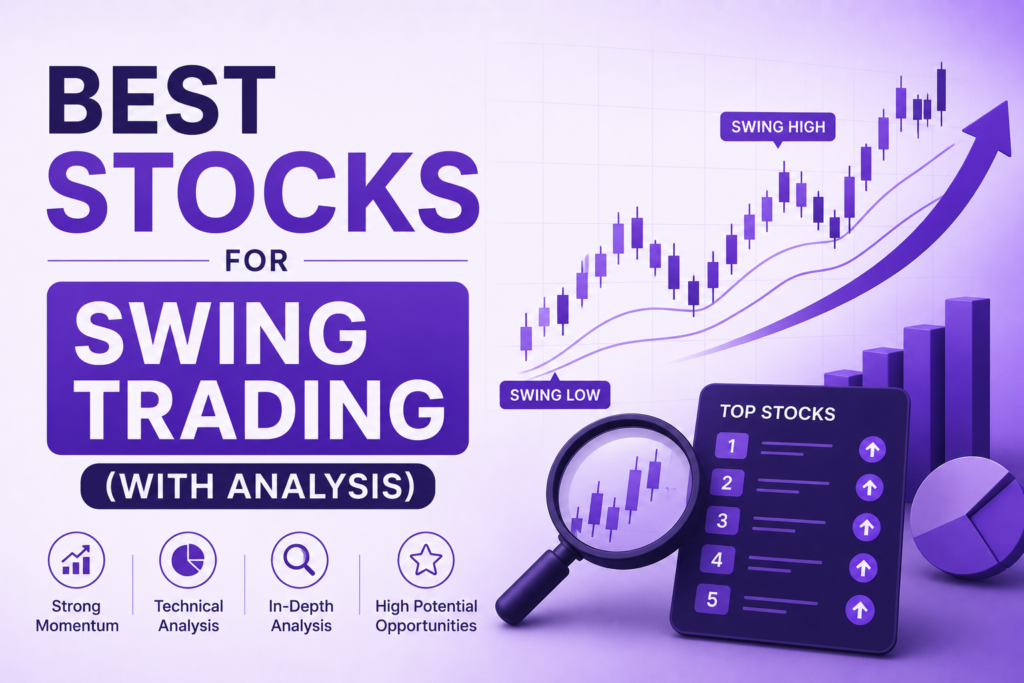
Swing trading is positioned between short-term trading and long-term investment. It will give you time to analyze, plan and trade without having to stare at the screen throughout the day. However, this is where the majority of traders fail, as they seek the best stocks, rather than learning what actually makes a stock best to swing trade. There is no definite list, which will always work. The right stocks are modified according to the market conditions. The process of selection and the structure of the analysis remains constant. This guide will demonstrate how to find quality swing trading stocks and how to study those right before making a trade. What Makes a Stock Ideal for Swing Trading? You must know the traits that make a good swing trading candidate before throwing yourself into the names of the stock. A typical good swing stock will exhibit: Swing trading should only be employed when the stock fluctuates in systematic fashion rather than in an unpredictable manner. Types of Stocks Suitable for Swing Trading The various kinds of stocks react differently. Knowing this will allow you to sift through better opportunities. Trending Stocks They are those stocks that have a clear direction with high highs or low lows. They are best suited in pullback trading and continuation tactics. It is the trending stocks that most swing traders opt to trade in as they are more clear. Breakout Stocks These stocks are clustering around key areas and are about to move. Once price breaks out with power it can tend to form powerful swing opportunities. Range-Bound Stocks These are stocks that rise and fall between support and resistance. They can be used in reversal-based swing setups but are time-consuming and require validation. Best Stocks for Swing Trading (With Analysis) Rather than assigning arbitrary names, we shall examine instances of how powerful swing trading stock performs. This assists you to employ the same reasoning in actual markets. Example 1: Strong Uptrend Stock Suppose an example of a stock which continuously made highs and highs on the daily chart. The price rebounds to a prior support, congruence with a 20 moving average, and a bullish engulfing candle. The bounce is characterized by an increased volume. Analysis: It is a quality swing buy program. Example 2: Breakout Setup Stock After several weeks, a stock trades between ₹900 and ₹950. Price loops ₹950 several times producing resistance pressure. It eventually breaks above 950 with a strong candle and maintains above the same. Analysis: This presents an abundance of the swing opportunity. Example 3: Pullback in Trend Stock in an uptrend corrects marginally on a massive movement and heads towards a trendline support. At the same level it creates a rejection candle and continues in an upward direction. Analysis: Perfect in the trade of continuation of swings. Example 4: Downtrend Short Opportunity A stock is developing lower highs with lower lows. It rallies into resistance and forms a bearish rejection candle. Analysis: This turns into a swing short opportunity. Step-by-Step Process to Find Swing Trading Stocks Rather than making guesses, complete a well-organized procedure. Step 1: Scan for Trending Stocks Begin by narrowing down stocks that are evidently moving. Stocks that are choppy or directionless should be avoided. Step 2: Mark Key Levels Identify important support and resistance zones. These areas can be used to establish possible areas of entry. Step 3: Wait for Setup Formation Enter not at once. Wait till there are setups such as: Step 4: Look for Confirmation Note price action in your level. Well formed candles or rejection signs enhance the likelihood. Step 5: Plan Risk and Target Define your: This renders the trade organized. Common Mistakes in Swing Trading Stock Selection There are many traders who cannot succeed due to poor stock selection and not due to strategy. Choosing Random Stocks Unstructured trading of stocks results in disparate outcomes. Ignoring Volume Stocks with low volume may act erratically and pose poor execution. Chasing Momentum Big move entries usually result in poor entries and pullback. Overcomplicating Analysis There are too many indicators that are confusing. The simple structure is more effective. How to Improve Swing Trading Accuracy Discipline and repetition bring about consistency. Focus on: The swing trading is enhanced when paying attention to the process rather than prediction. Why Swing Trading is Important in Stock Market Learning Swing trading is about the patience of waiting and making a timely decision and also making a decision in a systematic approach. It assists the traders to grasp the way markets fluctuate in cycles rather than responding to noise in the short term. This renders it a potent part of the pragmatic Stock Market Learning, particularly to beginners. Why Choose Aceink for Free Stock Market Workshop and Become Expert? Aceink is the best Stock recommendation company and is led by the SEBI Registered Stock Market Analyst Bharath Shankar, who assists traders in identifying the high quality swing trading stocks through systematic analysis, practical chart interpretation and regulated trading structure made with the intention of consistent decision making. Learn How to Select the Right Stocks Learn to sift the trending and high-probability swing stock rather than random samples. Build Strong Market Understanding Study trend analysis, support-resistance, and price action in a systematic manner. Improve Entry Timing The one that Aceink specializes in is assisting traders to figure out more advantageous entry areas of the swing trades. Learn from SEBI Registered Stock Market Analyst Learn the hardcore of the market by learning practical guidelines by Bharath Shankar. Free Stock Market Learning Opportunity Free Stock Market Webinar, Aceink assists traders to comprehend the strategies of swing trading and picking stocks on the market clearly and practically. Conclusion There is no permanent list of best stocks for swing trading. The actual advantage will be to know how to recognize them when the appropriate moment comes. By putting the emphasis on trend, structure, price action, and risk combined, your decision-making in swing trading becomes much better. Aceink assists traders develop
How to Become a Consistent Trader in 90 Days

Every new trader jumps into the stock market hoping to earn money on a regular basis. But once the early thrill wears off, things look much different. Some trades succeed, others lose, and lots of beginners wonder if steady trading results are really achievable. Truth is, consistency is achieved in this business through committing to a winning trade, rather than just a winning market swing. It is developed through good habits, a clear path in play, and knowing, making, and refining decisions every day. To become a trader that is trained and confident, you should develop a complete system, not pick up short-term wins. The good news is that ninety days gives you enough time to change your method if you stick to the proper steps. What Does It Mean to Be a Consistent Trader? Many beginners get consistency wrong. They think it means earning money every single day or winning all their trades. That is not how experienced traders operate. Consistency means sticking to a process you can repeat, handling risk well, and making calm choices no matter what happens in any one trade. If you want to become a trader who lasts and improves in the market, you must stop asking “How much did I make today?” and start asking “Did I stick to my process today?” That change in thinking is the starting point for consistency. Can You Become a Consistent Trader in 90 Days? Yes, but only if you know exactly what those ninety days should achieve. Ninety days will not make you an expert right away, but it can lay the base needed to become a trader with discipline, structure, and confidence. The aim during these ninety days is not to chase big profits quickly. The aim is to form habits that will back your trading for years ahead. First 30 Days: Build Strong Foundations The first thirty days must center completely on learning and watching. This period lets you gain knowledge before you feel pressure to produce results. Understand How the Market Moves Before you place any trades, learn market structure first. Study how trends develop, how support and resistance levels function, and how price acts near important areas. When you grasp how the market behaves, you create the base needed to become a trader who decides with information instead of guessing. Choose One Trading Strategy One major error new traders make is studying too many strategies together. It leads to mixed-up thinking and slower growth. Focus on just one useful strategy like breakout trading, pullback trading, or trend following. Learning one strategy really well beats knowing several strategies only a little. Observe Charts Every Day Looking at charts daily sharpens your ability to spot patterns. Set aside time to examine charts and see how the price acts. Watch how trends build, how pullbacks occur, and how breakouts take shape. This regular practice matters if you want to become a trader who reads market structure without effort. Next 30 Days: Focus on Execution After your base gets firmer, the next thirty days should center on actual trading actions. Create a Clear Trading Plan A trading plan brings order to your choices. It spells out exactly how you will trade. Your trading plan should cover: A trading plan clears away confusion and helps you become a trader who follows a system instead of feelings. Practice Taking Quality Trades In this period, do not try to enter lots of trades. Work on entering stronger trades. Before you take any trade, check these points: These checks raise the quality of your trades a lot. Start a Trading Journal A trading journal lets you follow your progress. It captures your choices, errors, and gains. Record: This habit helps you become a trader who gains knowledge from real experience instead of making the same errors again. Final 30 Days: Build Consistency and Discipline The last thirty days should center on sharpening your habits and fine-tuning your process. Review Your Previous Trades Reviewing trades is how real progress occurs. Examine your trades from recent weeks and look for your own patterns. Find out: This review speeds up your improvement. Strengthen Risk Management Risk management is what keeps your money safe when times get tough. No strategy stays perfect, and losing trades will come. The key difference is how effectively you limit those losses. If you want to become a trader who remains in the market long enough to succeed, making capital protection your top concern is essential. Build Emotional Control Trading stirs up emotions because real money is at stake. Fear, greed, and disappointment can push decisions. To gain consistency, you must manage those emotional responses. This includes: Emotional control marks the line between traders who struggle and those who advance. Daily Habits That Help You Become a Trader Consistency grows from habits, not from bursts of motivation. Good habits speed up your trading progress better than scattered work. Follow the Same Process Every Day A steady routine creates confidence. Analyze, prepare, trade, and review with discipline. Avoid Overtrading Some days simply lack good chances. Learning when to sit out is a key part of becoming a disciplined trader. Focus on Improvement, Not Immediate Profits When you chase only profits, feelings run higher. When you chase better skills, your whole process gets stronger. Stay Patient with the Learning Process Trading is a skill that needs time to develop. Patience keeps you committed through the journey. Why Choose Aceink for Free Stock Market Workshop and Become an Expert? Aceink is a reliable stock recommendation firm led by SEBI-registered stock market analyst Bharath Shankar. It helps traders create solid bases with hands-on market teaching, organized trading methods, and steady stock market education. Learn Practical Trading Frameworks Aceink shows real trading strategies built for actual market situations. These help traders develop clearer decision habits. Build Strong Market Understanding Study how trends, support and resistance, and price action connect during live market moves. Improve Trading Discipline Aceink works on building discipline by teaching
Why Trading Feels Difficult (Truth No One Tells You)

Most individuals get into trading with the idea that it is about finding the right stock or indicator. It should be followed by a few charts, a few strategies, and profits. Then reality hits. Trades don’t work consistently. Good setups fail. Emotions take over. And then, the trading becomes much more challenging than anticipated. This is the fact nobody tells you at an early age: It is not difficult to trade due to the market. It can be tough because of the approach you take. Charts are not the problem. It lies in decision-making, discipline, and taking action despite uncertainty. To dissect the actual causes of Why Trading Feels Difficult, not easy, and what most newcomers lack. Why Does Trading Feel Difficult? You need to understand the root cause of Why Trading Feels Difficult before resolving the problem. They are not fortuitous problems. They are typical trend patterns that every trader goes through. 1. You Are Dealing with Uncertainty Every Time In most careers, hard work leads to expected outcomes. The thing is, even a perfect trading arrangement will not work. This brings about mental unease since: This uncertainty contributes to making trading more difficult than it can be made out. 2. Information Overload Creates Confusion The amount of content out there is excessive: Novices attempt to become knowledgeable about everything at once. The finding is Disorientation rather than direction. They continue changing strategies instead of developing density. 3. Lack of Structured Approach The majority of traders begin without a procedure. They: With no structure, all trades become stressful. This is the reason why the issue of having a system is more valuable than having setups. 4. Emotional Pressure Affects Decisions Trading is with real money. That changes everything. Logic is distorted by emotions. Good setups fail because when they are executed, it should be emotional. 5. Expecting Fast Results Many novices expect to make a lot of money. When one does not get results immediately, one becomes frustrated. This leads to: Trading is a skill. It takes time to develop consistency. 6. No Risk Management Discipline Any minor errors can lead to significant losses unless the associated risks are properly controlled. Common issues include: This causes pressure and makes trading overwhelming. 7. Switching Strategies Too Often Traders continue to switch strategies rather than learn to handle them. This prevents learning. It is depth, not variety, that will bring consistency. 8. Lack of Real Market Experience Theoretical and video learning do not constitute the same thing as facing live markets. In real conditions: The lack of experience makes execution a challenge. Truth Most People Realize Late It is not only about knowledge when it comes to trading. It is about: And that is where most people fail. This is the reason why trading becomes challenging. How to Make Trading Feel Easier? It does not take a night for trading to become easy. But then you realize when you adjust your methods. Build a Simple and Structured System Rather than learning everything about it, please start by focusing on a single setup. At Aceink, in our weekly stock trading webinar, we explain every edge of stock marketing learning, making the trading easier for you. Define: Whether you want learning technical analysis, breakout vs fakeout, Focus on Process You should not consider yourself as a single trade. Focus on: Process brings about consistency. Accept Losses as Part of the Game Failure is not loss. They are involved in trading. Trades are lost even by professional traders. It is not aimed at making losses. The idea is to control them. Improve Decision-Making Gradually Trading is better with better decisions. This improves with: Growth is gradual Why Proper Stock Market Learning Changes Everything Most traders struggle to trade because they learn by chance. Structured Stock Market Learning can assist you to: This eliminates confusion and enhances clarity. Learn the Reality of Trading with Free Stock Market Webinar It is important to understand why trading can seem challenging. But actual progress comes from seeing how to do it in actual markets. Aceink, led by SEBI-registered stock market analyst Bharath Shankar, hosts a dedicated stock trading webinar every Sunday, providing detailed stock market education for beginners to experts. During this session, you will study: This will help you get out of confusion and into clarity. Conclusion The discipline, patience, and organization required to trade make it challenging, not because the market is complex, but because it demands discipline, patience, and planned thinking. Once you switch to purposeful decision-making, trading becomes more manageable and less stressful. To achieve this clarity, Aceink offers a free stock market webinar that teaches real market behavior, disciplined execution, and practical learning step-by-step.
How to Create a Trading Plan Beginner to Pro
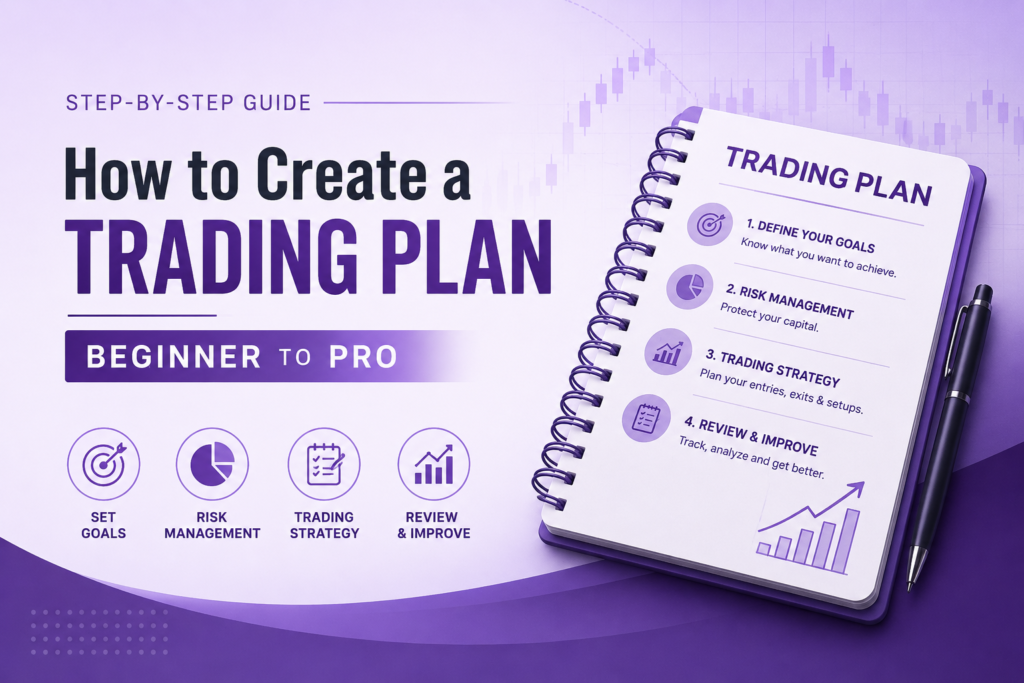
The majority of traders get into the market with enthusiasm, but without planning. They are aware of what stock they would like to trade, but they do not know where to enter, where to exit or how much risk they should take. It is also one of the largest reasons why beginners can hardly make it in the stock market. No plan trading makes all decisions emotional decisions. Fear, greed, and confusion reign supreme since there is no evident structure to be followed. That is altered by a trading plan. It instills discipline, enhances decision-making, and assists traders to look at the market with a clear vision. No matter whether you are an amateur or a beginner trader, one of the most significant steps you can achieve towards long-term regularity is to develop a decent trading strategy. What is a Trading Plan? A trading plan refers to a devised system of rules, which will guide how to approach the market. It encompasses all the stages of trade selection, risk management and exit strategy. It is not merely the matter of locating trades. It is concerning the creation of a process that would make your decisions continuous. A trading plan will provide answers to the following questions: This type of structure eliminates conjecture. Why Every Trader Needs a Trading Plan The market is dynamic. Devoid of a strategy, decisions become reactive. An appropriate trading plan will assist you: Emotions do not play a factor in the activities of professional traders. They are structure-dependent. How to Create a Trading Plan Step-by-Step Developing a trading plan does not necessarily need to be complex. It only has to be straightforward and sensible. Step 1: Define Your Trading Style The initial one is to determine what type of a trader you wish to become. The trading style available should reflect the time you have, your personality, as well as your risk tolerance. For example: The selection of the appropriate style brings about clarity. Step 2: Define Your Market Setup In a trading plan you must specify the specific kind of setup you will be trading. This could be: It is aimed at not trading everything, but rather focusing on one framework. Step 3: Create Entry Rules Entry rules stipulate at what point you are going to venture into a trade. These regulations ought to be narrow and explicit. For example: Obvious regulations decrease misunderstandings. Step 4: Define Stop-Loss Rules Any business requires risk insurance. You must set your stop-loss based on the structure and not on emotions. Examples include: A stop-loss saves capital and ensures the limit of the losses. Step 5: Define Target Rules A trading plan must always have a specific target. Targets can be based on: Being aware of your target (before entry) enhances discipline. Step 6: Set Risk Per Trade The most critical aspect of a trading plan is to determine the amount of money to place at risk on any particular trade. Professional traders run a predetermined percentage, rather than random amounts. It cushions the capital when situations are losing and it brings uniformity in the long run. Step 7: Create Trade Management Rules A trade does not cease at entry. You must have rules in handling it. This includes: Trade management enhances control. Step 8: Keep a Trading Journal A trading journal is used to assist you to review your decision. It shows: This is among the quickest methods by which one can enhance. Example of a Simple Trading Plan An example of a trading plan is as follows: Such a plan brings about clarity and structure. Common Mistakes While Building a Trading Plan Most novices do too elaborate or unrealistic plans. Common mistakes include: In order to achieve a good plan, this plan must be simple enough to adhere to. How to Upgrade Your Trading Plan from Beginner to Pro The strategy of a beginner usually includes only the entries. A job plan concentrates on the entire process. To enhance your plan: Expansion is achieved by enrichment. Why Trading Plans are Important in Stock Market Learning A trading plan educates traders on how to think in a systematic way. Rather than responding to the market, you study how to go through a process. This brings about discipline, consistency and enhanced decision making. This is why trading strategies are the major element of realistic Stock Market Learning. Why Choose Aceink for Free Stock Market Workshop and Become Expert? Aceink is the best Stock recommendation company headed by SEBI Approved Stock Market Analyst Bharath Shankar, who helped traders gain practical market knowledge through structured trading education, live market analysis and disciplined strategy-building designed as a beginner and serious trader. Learn How to Build a Practical Trading Plan Learn how expert traders develop systematic strategies to regularly execute in the market. Improve Trade Discipline Aceink assists traders establish stronger behaviors regarding entry, exit and management of risks. Learn Practical Market Strategies Gain hands-on experience with breakouts, pullbacks, trend-following, and structured setups. Learn from SEBI Registered Stock Market Analyst Learn under the guidance of Bharath Shankar and get on the ground lessons about the stock market. Free Stock Market Learning Opportunity Free Stock Market Webinar by Aceink assists traders to comprehend the trading plans, strategies and market structure in an easy and simplified form. Conclusion A trading plan forms the pillar of disciplined trading. It eliminates confusion, risk management, and brings about consistency in decision-making. The lack of a plan turns the trading into something emotional. Trading is organised with a plan. Aceink assists traders to develop this discipline by its Free Stock Market Webinar where practical trading plans, stock analysis and strategy implementation are outlined with real market knowledge. Developing a good trading plan can entirely transform the manner in which you deal with the stock market.
How Do I Analyze a Stock Step-by-Step?
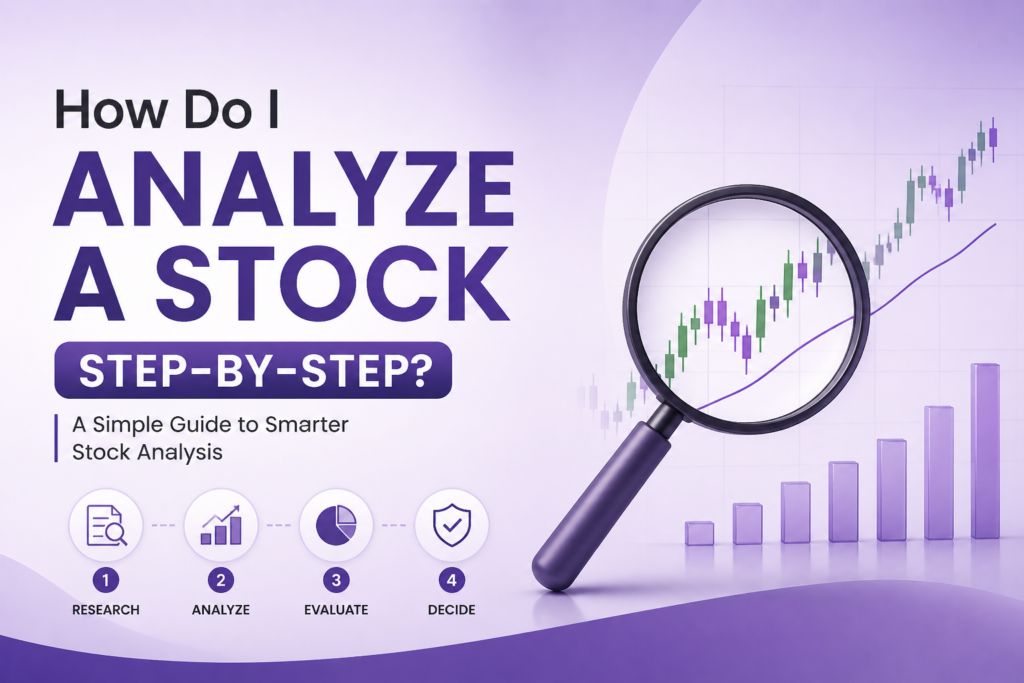
Real trading starts with stock analysis. Experienced traders never depend on tips, random news, and market noise before they enter any stock. They have a systematic procedure to know whether the stock is worth their time, money, and risk. This is the main area where most beginners falter. They tend to focus on price movements rather than on the underlying structure of the trade. That translates to bad entries and bad decisions. A good stock analysis procedure can also help you sift out superior opportunities, avoid bad deals, and build confidence in your choices. This guide will break down the exact steps to analyze a stock step-by-step. Why Stock Analysis is Important Before Trading All stocks have a reason to move. Some migrate due to the great momentum, some due to the power of business, and some due to temporary speculation. In the absence of analysis, it is hard to distinguish between quality opportunities and random motion. A structured stock analysis process can assist you to: This is among the best premises in real-life Stock Market Learning. How to Analyze a Stock Step-by-Step? A systematic framework will make the stock analysis easier. Rather than reviewing randomly chosen charts, consider the following key steps. Step 1: Start with the Overall Market Trend The first step before analyzing any stock is to check the broader market. When the market as a whole is healthy, bullish stock setups tend to be more successful. Even good-looking stocks might have problems in a weak market. Market trends give context. This includes looking at: A stock must always be evaluated in the market context. Step 2: Identify the Stock Trend After understanding the market environment, the next step is to identify the stock’s trend. Examine price structure: Trends inform you of the path you should take to target your opportunities. The purchase when the market is in an uptrend, and the sale when the market is in a downtrend, usually enhances the likelihood. Step 3: Mark Important Support and Resistance Levels The chart’s framework consists of support and resistance. These are significant areas where price has been responsive in the past and may be again. Good levels assist in responding to significant questions: The levels enhance decision-making by providing structure. Step 4: Check Price Action Behavior The story of the buyers and sellers is in the price action. When the price gets to a key zone, monitor its response. Look for: Price action confirmation helps filter out stronger setups. Step 5: Use Moving Averages for Trend Confirmation Moving averages strategy make the trend analysis simpler. Most commonly used are: These aid in determining the strength of the short-term, medium-term, and long-term trends. When the price is higher than the key moving averages, it is a sign of strength. When less, it tends to be perceived as weak. Step 6: Check Momentum Indicators Indicators such as RSI and MACD help gauge momentum. They are not to be applied on their own but can be used to aid analysis. For example: These tools provide additional validation to the entire installation. Step 7: Analyze Volume Volume shows participation. Strong moves with strong volume tend to have higher conviction than those with weak volume. For example: Volume aids in justifying price movement. Step 8: Evaluate Risk-Reward Before Entry Although the setup may appear robust, the trader should have a sound sense of risk. Before entering, define: An effective trade display ought to provide a wholesome risk-reward framework. This is to cushion capital and enhance long-term stability. Real Example of Stock Analysis Process Consider a stock with a good uptrend. The market in general is also bullish. The stock is drawn back in a significant support area that coincides with the 20 Moving Average. Price creates a bullish engulfing candlestick, and RSI shows a strong momentum recovery at this level. The volume is also gained in the bounce. This arrangement now has multiple confirmations: In this way, the quality of trade in structured stock analysis is enhanced. Common Mistakes Beginners Make While Analyzing Stocks Many novices compromise the quality of their trade due to poor analysis. How to Improve Stock Analysis Skills? Repetition and structure result in improvement. Focus on these to learn Improve Stock Analysis Skills: With time, you have a better chance of detecting quality setups. Why Choose Aceink for a Free Stock Market Workshop and Become Expert? Aceink is the best Stock recommendation company, led by SEBI-registered stock market Analyst Bharath Shankar, and assists traders to gain practical market knowledge via systematic stock analysis, live chart training, and systematic trading education, which is offered to beginner traders and to traders who are growing. Many traders fail even after learning the basics due to poor risk management, emotional decisions, and lack of discipline. Success in trading comes from proper execution, consistency, and applying strategies correctly in real market conditions. Learn Practical Stock Analysis Framework Know how seasoned traders study stocks step-by-step and then place trades. Build Better Market Understanding Study trend analysis, support and resistance, and price action in a practical manner. Improve Trade Selection Quality Aceink assists traders in identifying better setups rather than relying on random opportunities. Learn from an SEBI-registered stock market analyst Learn the market in a systematic way with Bharath Shankar, a real-life expert on the stock markets. Free Stock Market Learning Opportunity Free Stock Market Webinar by Aceink assists traders in establishing solid foundations for stock analysis by applying market knowledge. Conclusion Stock analysis is not about finding a chance. It is about creating an organized procedure that enhances trade quality and minimizes unwarranted errors. An analysis of trends, support, price action, volume, and risk helps you make better, more disciplined decisions. Aceink assists traders in developing this applied knowledge through its Free Stock Market Webinar, which explains its stock analysis, trade selection, and market structure using practical examples from the real market.