
Most new traders start their trading journey with strong enthusiasm but they lack appropriate guidance. They watch random videos, follow social media tips, and keep changing strategies without understanding how the market actually works. The situation creates confusion which leads to frustration instead of helping people build their confidence.
The basic principle states that Learning Trading becomes easier when you follow a structured process. The development of trading skills demands three essential components which include practice, discipline, and patience. A successful trading system requires only essential concepts which must be learned in proper order. The correct learning sequence of fundamental concepts represents the fundamental requirement for achieving success.
This roadmap will help you progress from beginner stock market trading skills to become a more disciplined and self-assured trader.
Why Do Most Beginners Struggle While Learning Trading?
Traders need to establish strong foundational skills before they can learn all trading techniques.
Some common mistakes include:
- Entering live trading too early
- Following random trading tips
- Switching strategies repeatedly
- Ignoring risk management
- Depending too much on indicators without understanding price movement
Without proper guidance, Learning Trading can feel difficult and overwhelming.
Step-by-Step Roadmap to Learn Trading
The process of learning becomes easier for traders when they divide their studies into basic training parts. The first step of learning requires development of essential skills which will become more advanced in subsequent stages.
Step 1: Understand How the Stock Market Works
To comprehend how stock trading operates, one must first possess a basic understanding of the stock market.
Start with basic concepts such as:
- Stocks and indices
- Buyers and sellers
- Market timings
- Order types
- How prices move
The first stage of the program teaches you about the environment which exists for trading activities. Anyone who wants to Learn Stock Market Trading must first establish a complete understanding of market fundamentals.
Step 2: Learn Market Structure and Trends
Once the basics are clear, the next step is understanding market direction.
Focus on concepts like:
- Uptrend
- Downtrend
- Sideways market
- Higher highs and lower lows
One of the most basic parts of learning trading is identification of trends so that one can work in unison with the trend instead of counter to it.
Step 3: Understand Support and Resistance
Chart analysis depends on support and resistance which function as essential elements. Price zones serve as market reaction points because active buyers and sellers develop at those locations.
Learning support and resistance helps traders:
- Find better entry points
- Place stop-losses effectively
- Identify breakout opportunities
This stage improves your practical chart-reading skills.
Step 4: Learn Price Action Basics
Watching price action helps traders directly assess the market’s movements based on their price charts, rather than indicators.
Focus on learning:
- Candlestick patterns
- Rejection candles
- Breakout candles
- Consolidation zones
This improves decision-making and helps traders identify stronger setups.
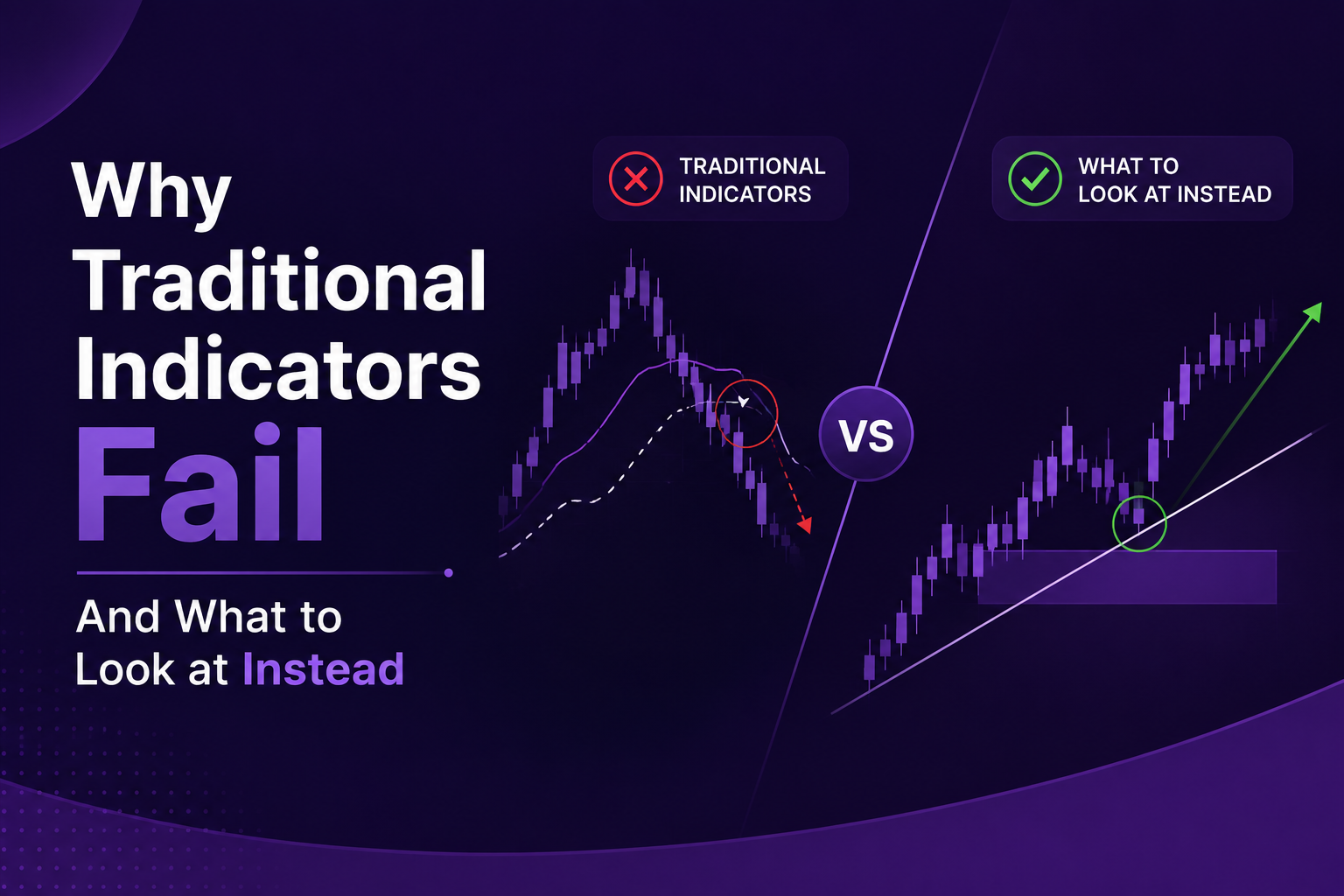
Step 5: Learn Technical Indicators Properly
Indicators should complement analysis, not substitute it
Upon gaining a good comprehension of charts and price action, start learning the indicators like:
- RSI
- MACD
- Moving Averages
- Volume analysis
The Technical Analysis Free Webinar provides a structured framework which helps beginners to grasp indicators better because they can see practical examples which make learning easier.
Step 6: Choose One Trading Strategy
Do not try to learn every strategy together.
Choose one approach and focus on mastering it properly. Some common strategies include:
- Breakout trading
- Pullback trading
- Swing trading
- Trend-following strategy
Traders improve faster when they focus on one system instead of constantly changing methods.
Step 7: Learn Risk Management
Risk management protects traders from large losses and emotional decisions.
Important concepts include:
- Position sizing
- Stop-loss placement
- Risk-reward ratio
- Capital protection
Risk assessment is a nexus toward long-term achievement that traders should bear in mind.
Step 8: Build a Trading Plan
A trading plan helps create discipline and consistency.
Your plan should clearly define:
- Which setups you will trade
- Entry conditions
- Exit strategy
- Risk management rules
Without a proper plan, emotions often control trading decisions.
Step 9: Start Practicing with Discipline
Learning transforms into actual experience through the process of practice. You need to dedicate your time for chart analysis which should be done on a regular basis to discover trading setups that match your established strategy.
Focus on:
- Following your rules
- Waiting patiently for quality trades
- Managing risk properly
Consistency develops only through disciplined practice.
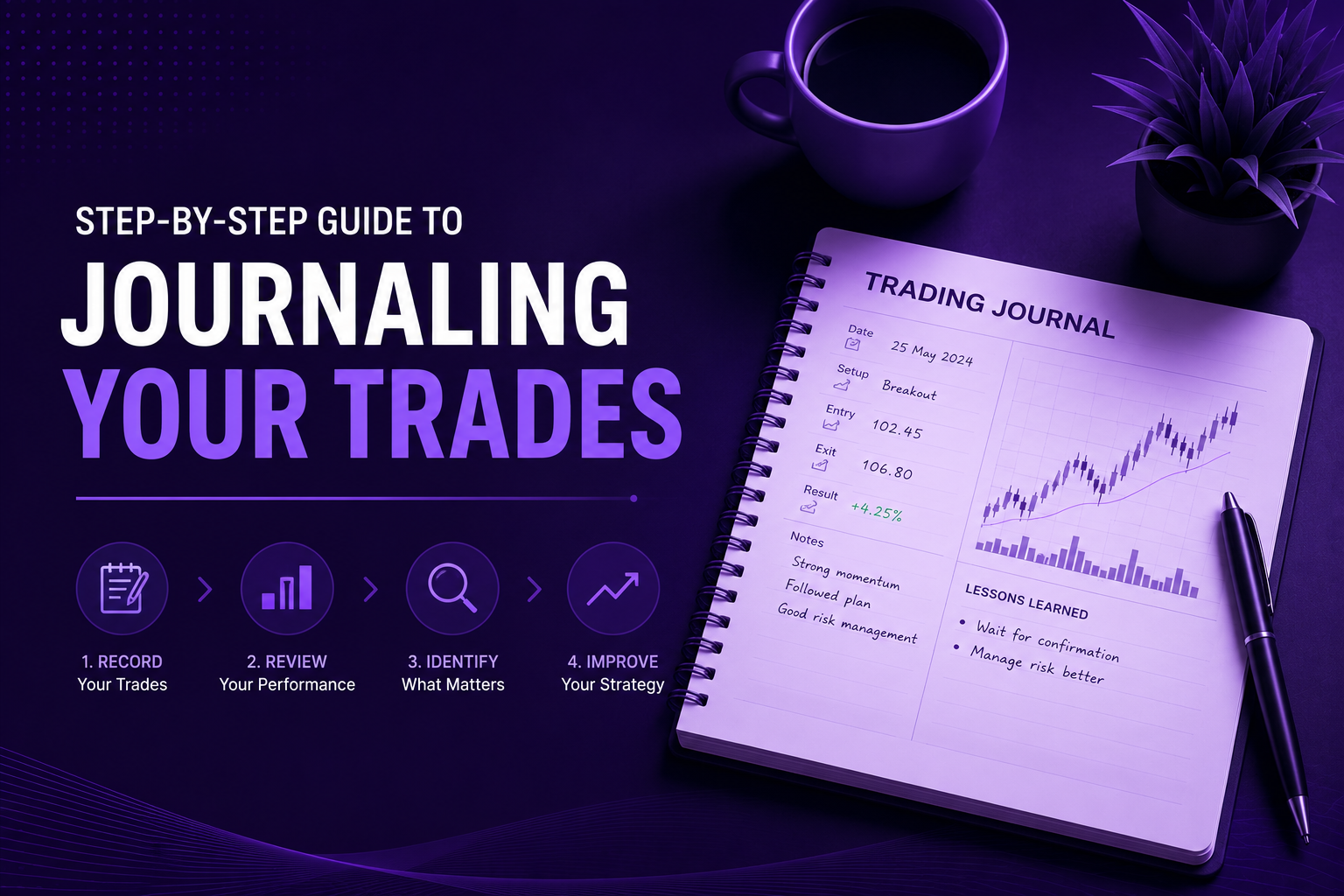
Step 10: Maintain a Trading Journal
A trading journal helps traders track progress and identify mistakes.
Record details such as:
- Why you entered a trade
- How the trade was managed
- Mistakes made during execution
- Areas for improvement
Reviewing trades regularly helps traders improve faster and become more disciplined over time.
Common Mistakes While Learning Trading
Many beginners slow down their growth because of avoidable mistakes.
Expecting Fast Profits
Trading requires traders to develop their expertise through extended practice. When people pursue instant financial gain their emotional responses will result in them making bad decisions which will cost them money.
Overloading with Information
The process of learning multiple concepts at once will result in confusion rather than achieving better understanding.
Ignoring Risk Management
Traders who fail to manage their risk will cause their effective trading methods to lose all effectiveness.
Switching Strategies Frequently
The constant change of trading methods prevents traders from developing both dependable performance and self-assurance.
How to Learn Stock Market Trading Faster
Learning becomes easier when you keep the process simple and structured.
Focus on these habits:
- Learn one concept at a time
- Practice chart analysis regularly
- Follow one trading process consistently
- Review mistakes frequently
- Stay patient during the learning phase
This approach helps traders build confidence steadily.
Learn Trading with Practical Market Understanding
Aceink, led by Bharath Shankar, focuses on helping traders build strong market foundations through practical and structured learning.
The approach to trading requires study of actual market operations through its simplified methods instead of using intricate theoretical frameworks.
Through the Free Trading Webinar, traders learn concepts such as:
- Market structure
- Trend analysis
- Price action
- Breakout setups
- Disciplined trade execution
The sessions are designed for beginners who want to Learn Stock Market Trading step-by-step with better clarity and confidence.
Why Beginners Join Aceink’s Technical Analysis Free Webinar?
Theoretical concepts are understood by most traders but they fail to use this knowledge during real market trading. The Technical Analysis Free Webinar of Aceink provides training on chart reading skills and basic trading education methods.
The webinar helps traders:
- Understand technical analysis practically
- Improve chart-reading confidence
- Learn structured trading concepts
- Build disciplined trading habits
- Avoid common beginner mistakes
This practical approach makes Learning Trading more structured and easier to understand.
Conclusion
Trading becomes much easier when you stop chasing shortcuts and start following a proper learning process. Traders who develop strong fundamentals through disciplined practice and effective risk management techniques will achieve successful trading results throughout their trading careers.
The best way to reach your goal of Learning Stock Market Trading with better practical understanding requires you to develop discipline and patience while continuously improving your skills instead of seeking instant financial gains.
The Free Trading Webinar from Aceink provides traders with fundamental trading knowledge through Bharath Shankar’s simplified explanations of market structure and technical analysis and practical trading concepts.